


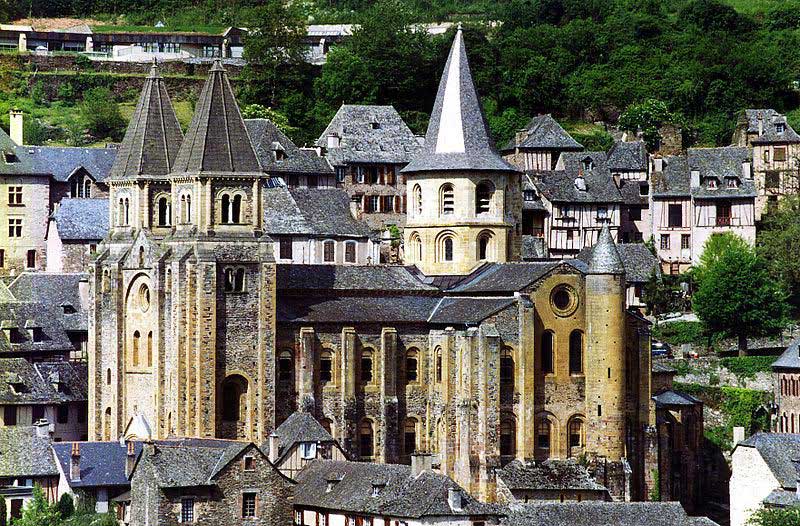
Located in northern Aveyron, Conques is an essential stop on the Way of Le Puy, the most famous of the routes leading to Santiago de Compostela, and a major center of Christianity.
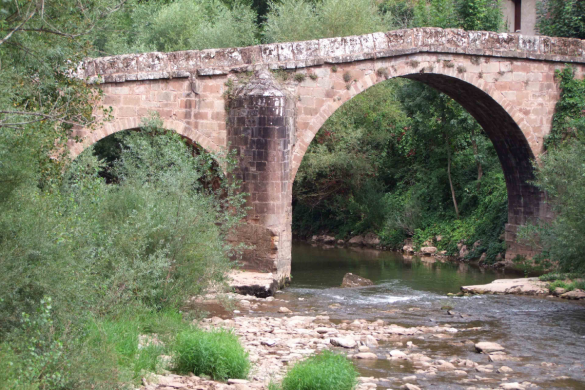
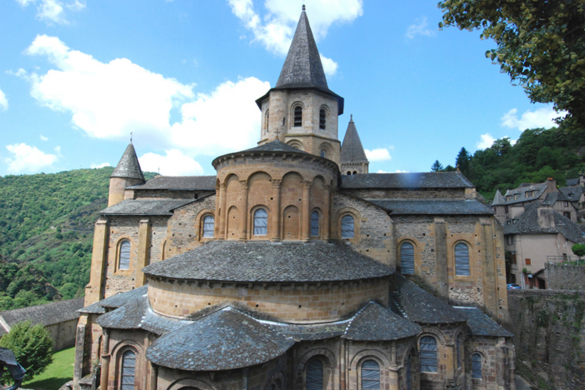
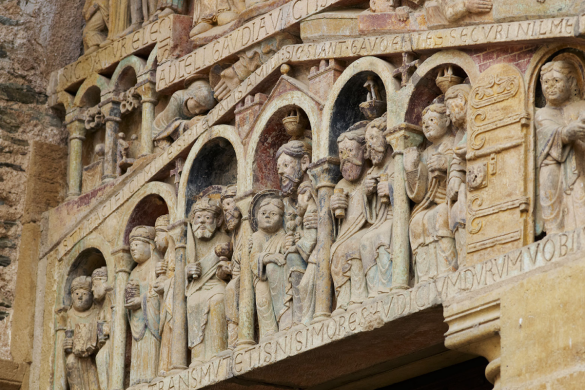
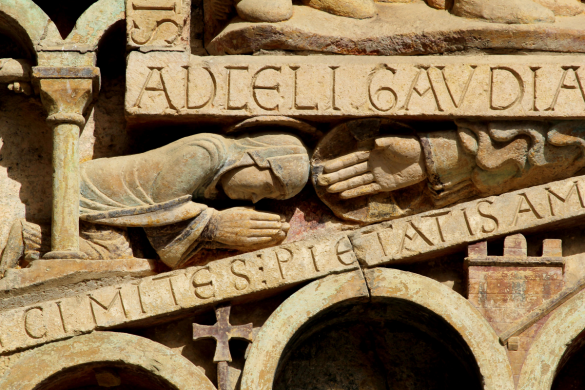
Its significance since the 12th century in the pilgrimage to Santiago de Compostela has earned it a place on the UNESCO World Heritage List for two of its monuments: the Abbey Church of Sainte-Foy, famous for its Last Judgment tympanum, and the Pilgrims’ Bridge spanning the Dourdou River.
All travelers, starting with the writer Prosper Mérimée—who was also an inspector of Historic Monuments—and who admitted in 1837 that he was “in no way prepared to find such riches in such a desert,” were struck by the “wild” appearance of the site of Conques
The history of Conques begins in the 11th century when monks built a large abbey church on the foundations of an ancient hermitage.
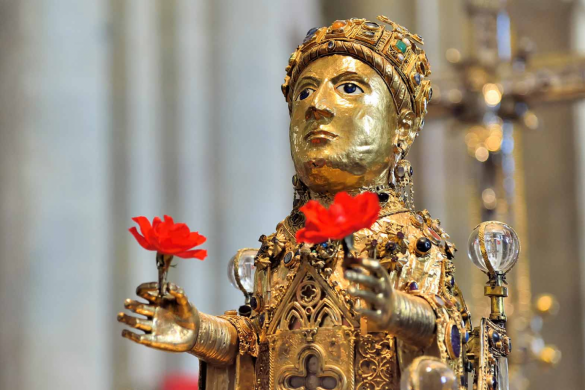
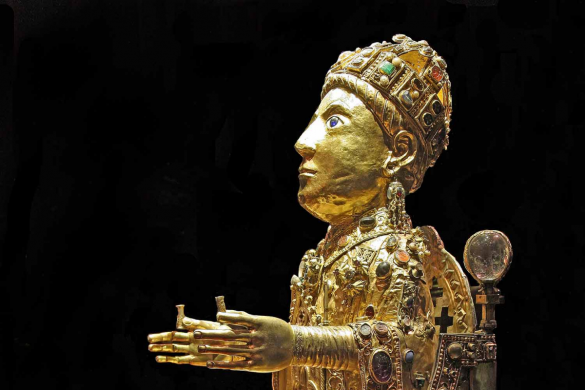
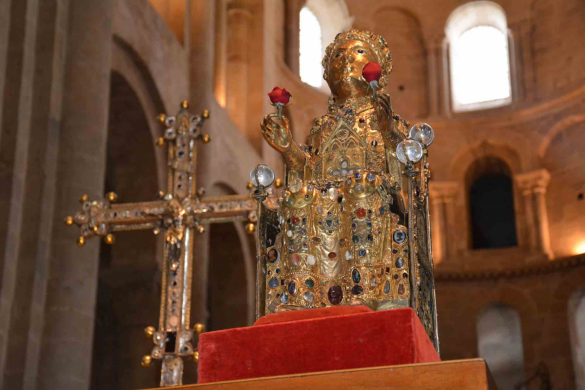
This abbey church became the repository for the relics of Saint Foy, a young Christian martyr.
The site attracted countless pilgrims, and miracles followed one after another…
Conques’s reputation then began to rise, as did its wealth, embodied by the Treasury of Saint Foy, a collection of gold and silverwork unique in Europe, on display at the abbey.
Conques can take pride in housing, within its abbey church, stained-glass windows created by the contemporary painter Pierre Soulages, as well as a tympanum composed of 124 sculpted figures depicting hell and paradise.
Conques, the town...
From its very origins or shortly thereafter, Conques became a walled town. The construction of the ramparts dates back to the Romanesque period, as evidenced by the architecture of the three remaining city gates.
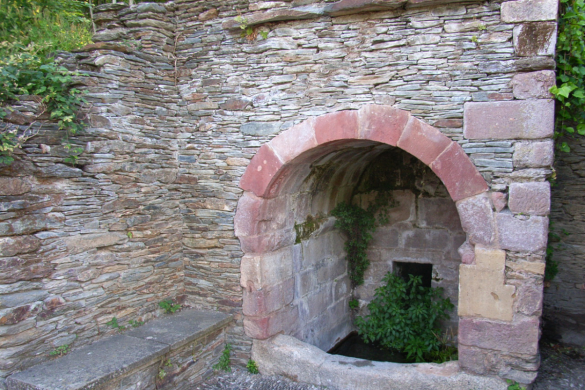
Among the town’s notable monuments are the Romanesque gates—the Porte de Fer, the Porte du Barry, and the Porte de la Vinzelle—several towers, the bread ovens, the public fountains, and the Saint-Roch Chapel.. .
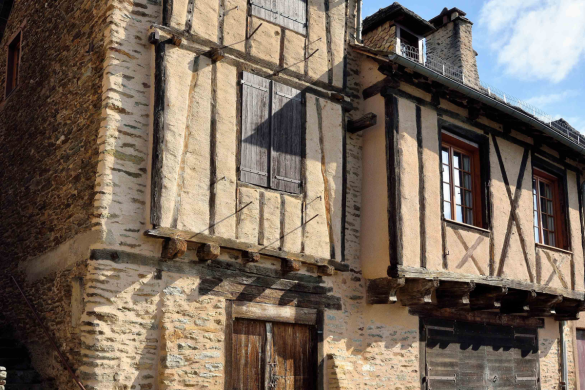
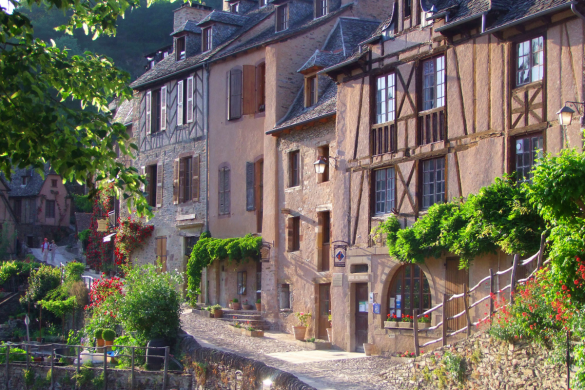
Not to mention the houses... The oldest houses in the village date back to the late Middle Ages.
Arranged in terraces on the hillside, the houses generally face south with their main facades and have two entrances: one on the ground floor, opening onto the lower street, and one on the upper floor, opening onto a garden or the upper street. According to a local saying: “In Conques, you enter through the attic and exit through the cellar.” Cellars are ubiquitous in this former wine-growing region, sometimes adjacent to a shop. Each location had to be carved out of the rock, and to prevent rockfalls, a relief arch is often built against the back wall.
The historic monuments—the Abbey Church of Sainte-Foy and the Pilgrims’ Bridge over the Dourdou—are listed as UNESCO World Heritage Sites as part of the Routes of Santiago de Compostela in France.
Since 1982, Conques has been listed among the Most Beautiful Villages of France.
In 2009, Conques became a Grand Site Midi-Pyrénées and then a Grand Site Occitanie in 2017.
In 2022, Conques was awarded the “Ville et Métiers d'art” label.
Conques-Marcillac Tourist Office
12320 Conques-en-Rouergue
Tel.: 05 65 72 85 00
contact@tourisme-conques.fr
Translated with DeepL.com
(free version)