

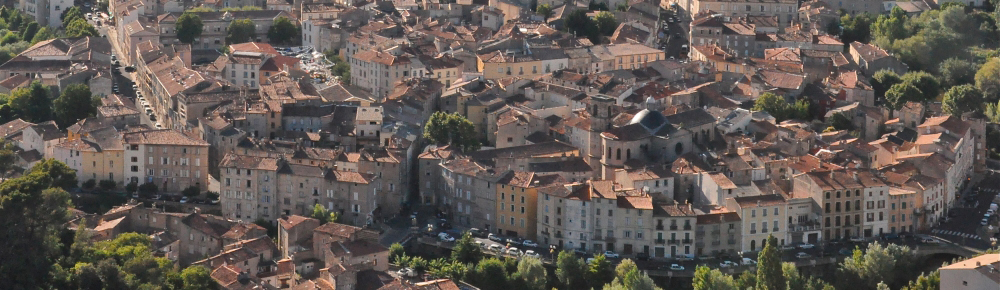
Between Larzac and Salagou, capital of the Hérault highlands, Lodève offers numerous architectural reminders of its former status as an episcopal city.
“Luteva,” the ancient name for Lodève, first flourished during the Gallo-Roman period.
A little history
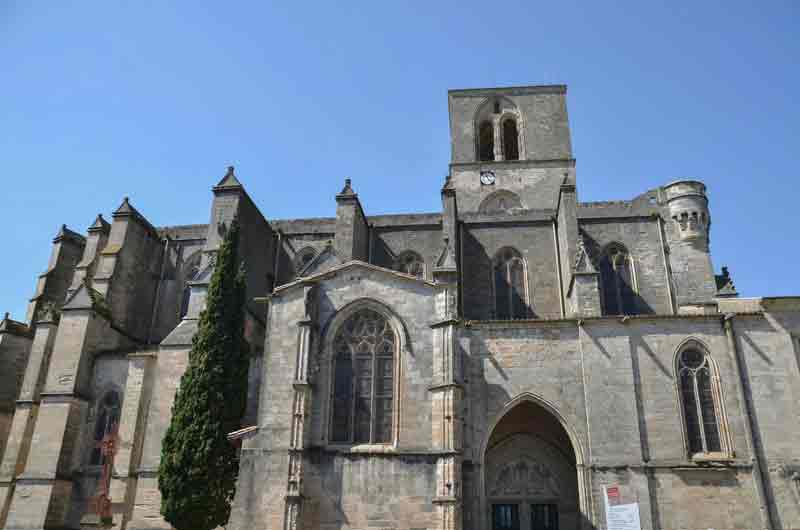
Then, in the Middle Ages, the episcopal city was organized around Saint-Fulcran Cathedral. The remains of the fortifications bear witness to the troubled times of the late Middle Ages and the Wars of Religion.
Lodève enjoyed great prosperity thanks to the textile industry.
In 1726, Cardinal de Fleury, a native of Lodève and Prime Minister to Louis XV, granted the city a monopoly on the supply of cloth for the clothing of the royal infantry troops.
The mansions still bear witness to the city's prosperity.
The textile industry flourished for two hundred years, reaching its peak in the mid-19th century before undergoing several crises, culminating in the closure of the last factory in 1960.
A rich heritage
In 2006, Lodève joined the national network of Cities and Regions of Art and History, which brings together 146 certified areas.
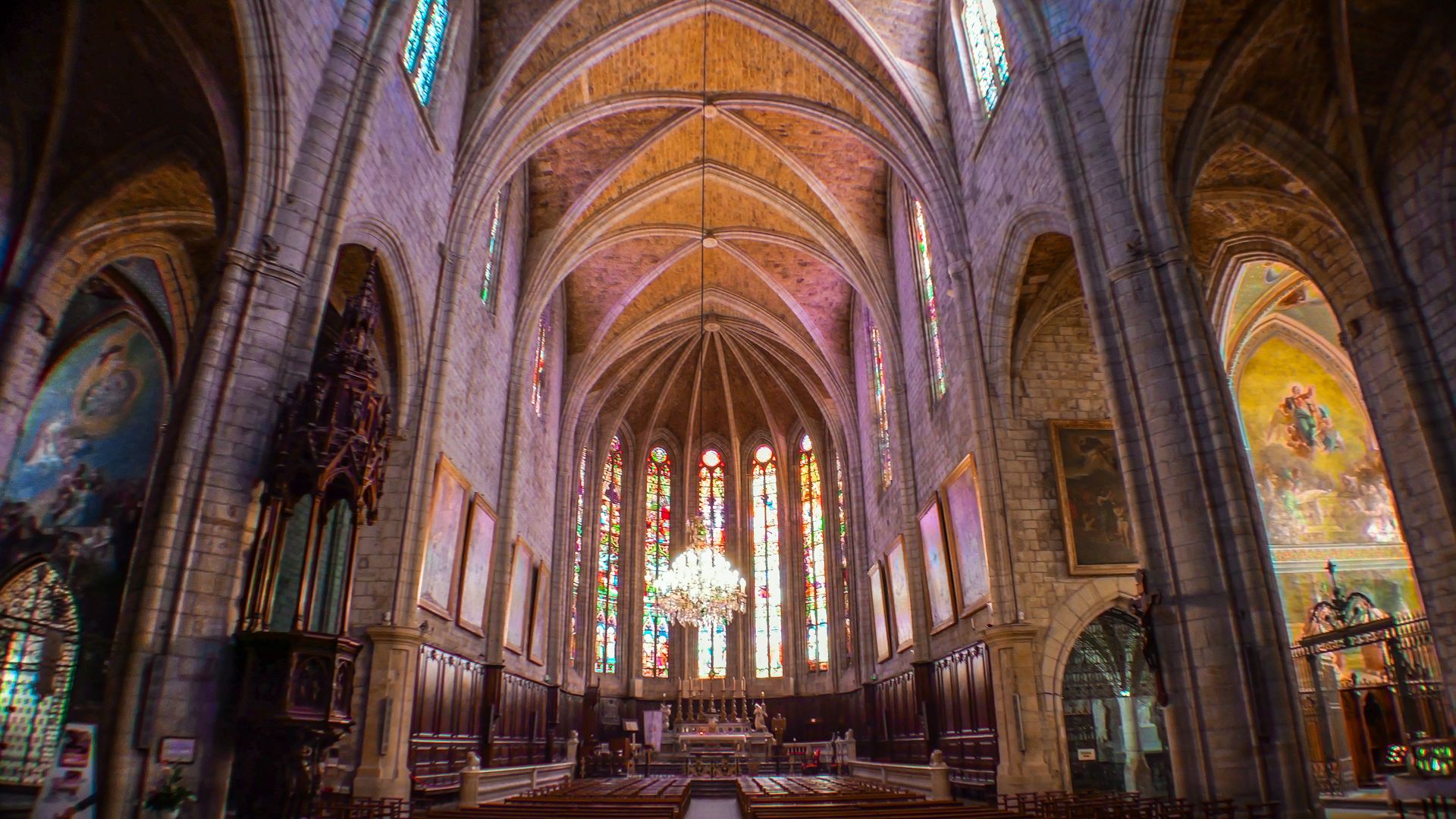
Lodève is home to Saint-Fulcran Cathedral, built in the 12th and 14th centuries on the site of two religious buildings, in the Languedoc Gothic style.
Another site worth seeing is the former Episcopal Palace, built between 1667 and 1779 by the last bishops of Lodève. Since 1809, it has housed the Town Hall.
Built in 1819 on the site of the former Saint-Pierre church, the Halle Dardé, listed as a Historic Monument in April 1994, is now open to the public and houses three works by the Lodève sculptor Paul Dardé.
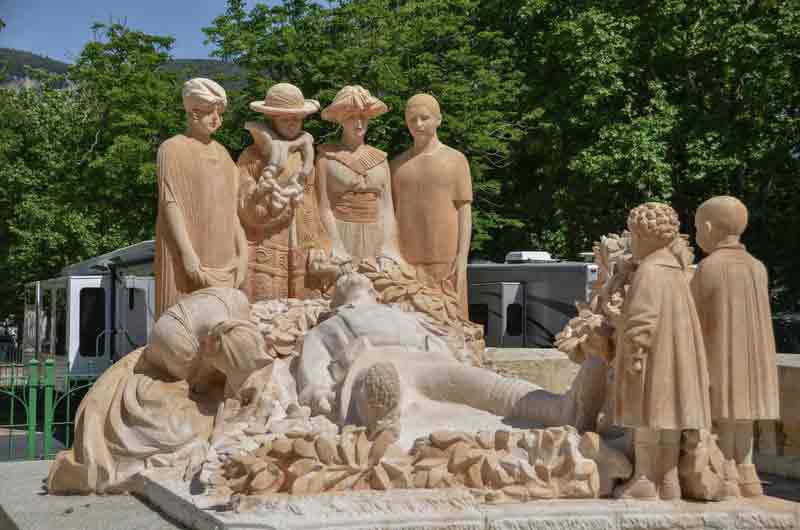
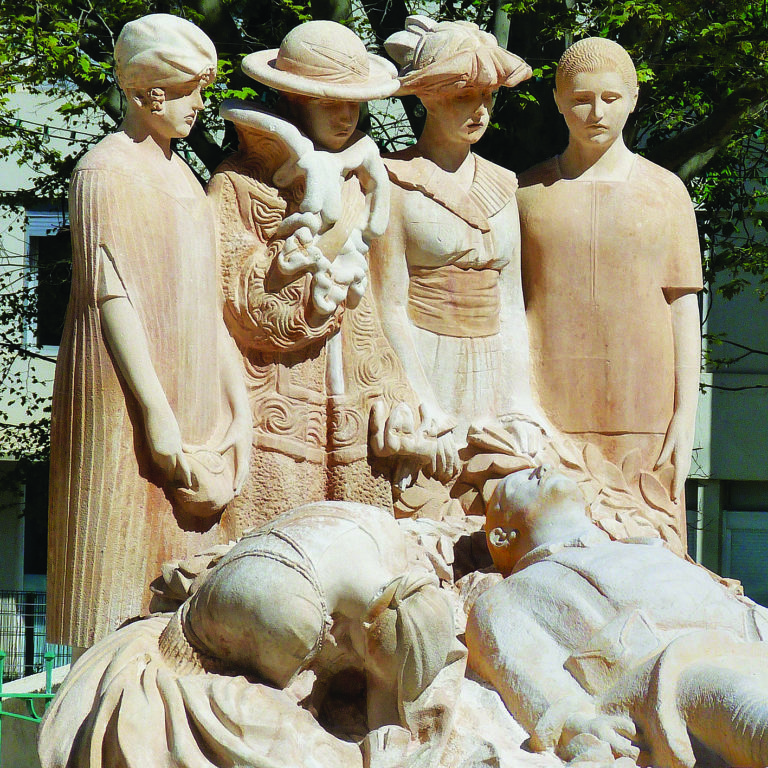
Paul Dardé also created the War Memorial, which was inaugurated in 1930.
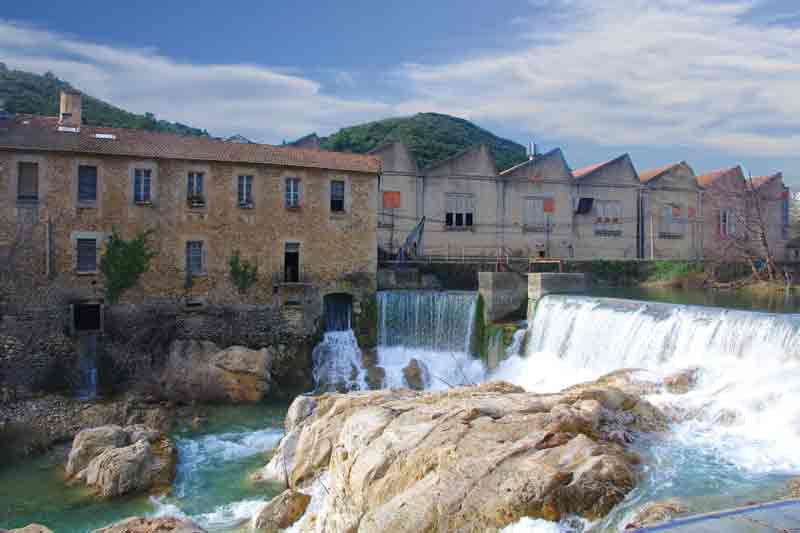
Other notable buildings in Lodève include the bridges. As the town is located between two rivers, the Soulondres and the Lergue, seven bridges were built to cross them.
Four bridges cross the Soulondres: the Montifort Bridge, the Barry Bridge, the Pont Neuf, and a very recent footbridge. Three bridges span the Lergue: the Vinas Bridge, the Lergue Bridge, and the Pont de Celles.
These bridges were built at different times, in the Middle Ages, 17th, 18th, and 19th centuries.
Museums and manufacturing
Lodève is also home to three renowned cultural sites.
Firstly, the Musée de Lodève, certified as a “Musée de France,” which has been housed in the Fleury family mansion since 1987. The museum's permanent collections are organized into two main departments: fine arts and geology, paleontology, prehistory, and archaeology.
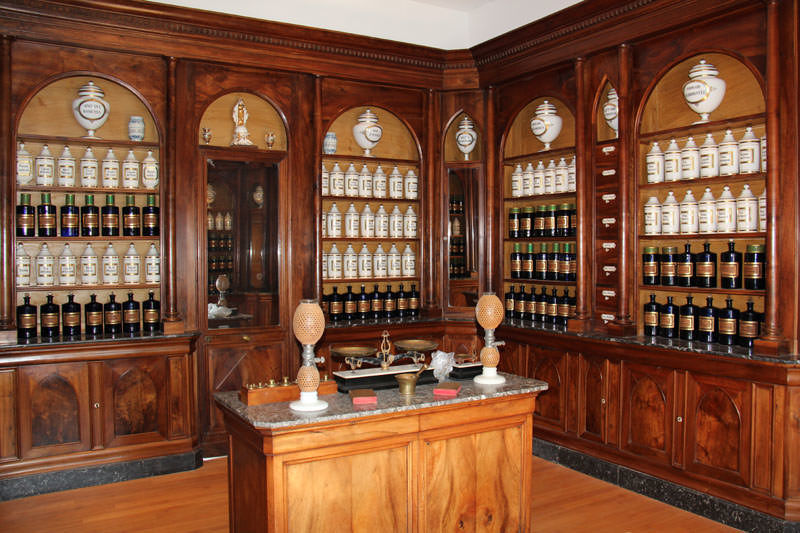
Then there is the Apothecary of the Saint-Jean Hospital, which houses an exceptional and little-known heritage, including glass and porcelain jars.
Finally, there is the Manufacture Nationale de la Savonnerie, Atelier de Lodève. Here, exceptional carpets are woven for embassies, national monuments, the Élysée Palace, and the collections of the Mobilier National, perpetuating a weaving technique that is nearly four centuries old.
Tourist Office
Lodévois & Larzac
7, Place du Rialto
34700 Lodève
Tel.: +33 (0)4 67 88 86 44
https://www.tourisme-lodevois-larzac.fr/lodeve
Translated with DeepL.com
(free version)