


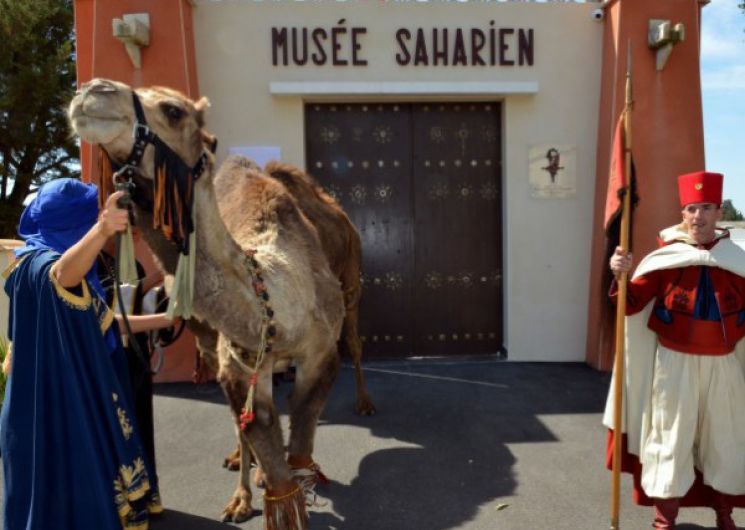
Located near Montpellier, Le Crès is home to the Saharan Museum, which opened to the public in June 2014.
This museum is unique not only for its architecture, which echoes the lines of a traditional Saharan fort (bordj) in desert colors, but also because it is the only museum in Europe dedicated to the history and peoples of the Sahara.
A truly amazing visit...
Spanning two floors, you can explore the entire Saharan world: its exploration during the French colonial era, the lives of nomads, and numerous everyday objects and magnificent jewelry.
One display case is dedicated to the explorer T. Monod, featuring his personal belongings. During your visit, you can see a unique reconstruction of a horse-drawn chariot belonging to the Garamantes, a mysterious tribe from southern Libya.
Photographs by M. Bruggmann, JM. Durou, and Alain Sèbe also reveal the beauty of the peoples of the Sahara.
Finally, display cases are dedicated to the work of HJ. Hugo, a renowned prehistorian, and to the epic story of the Berliet Ténéré Chad Mission.
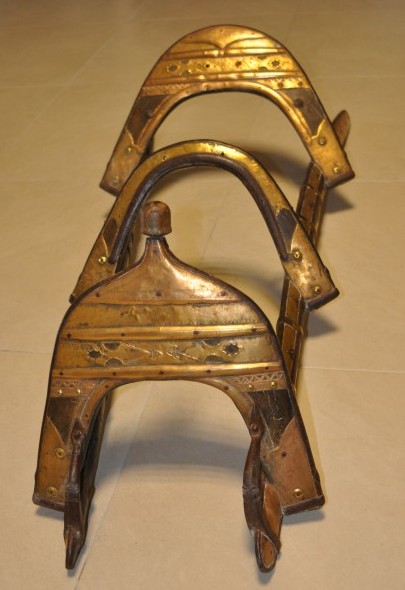
The display cases on the left are dedicated to Saharan explorers, both famous and lesser-known (Charles de Foucauld, General Laperrine, Heinrich Barth, etc.), depicted through photographs and rare documents as well as unusual objects, such as fragments of Laperrine’s plane or sundials without which no exploration would have been possible. You’ll also see a camel saddle dating from Napoleon’s campaign in Egypt!
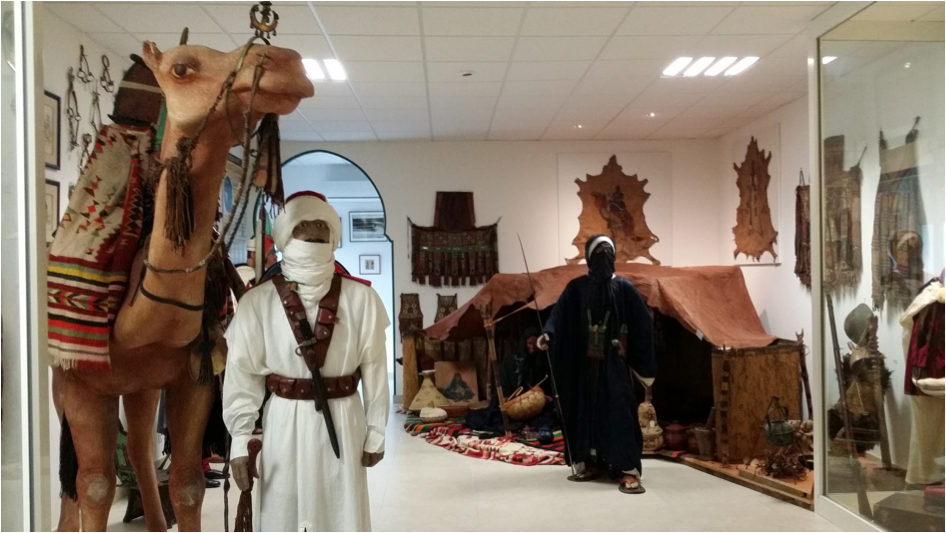
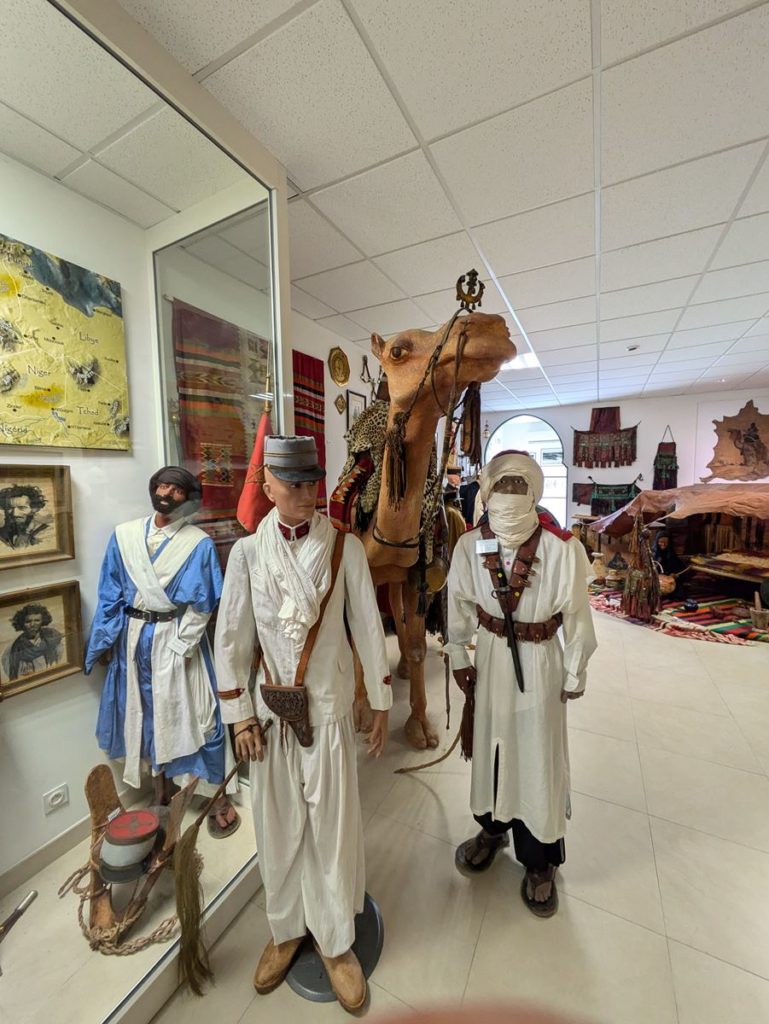
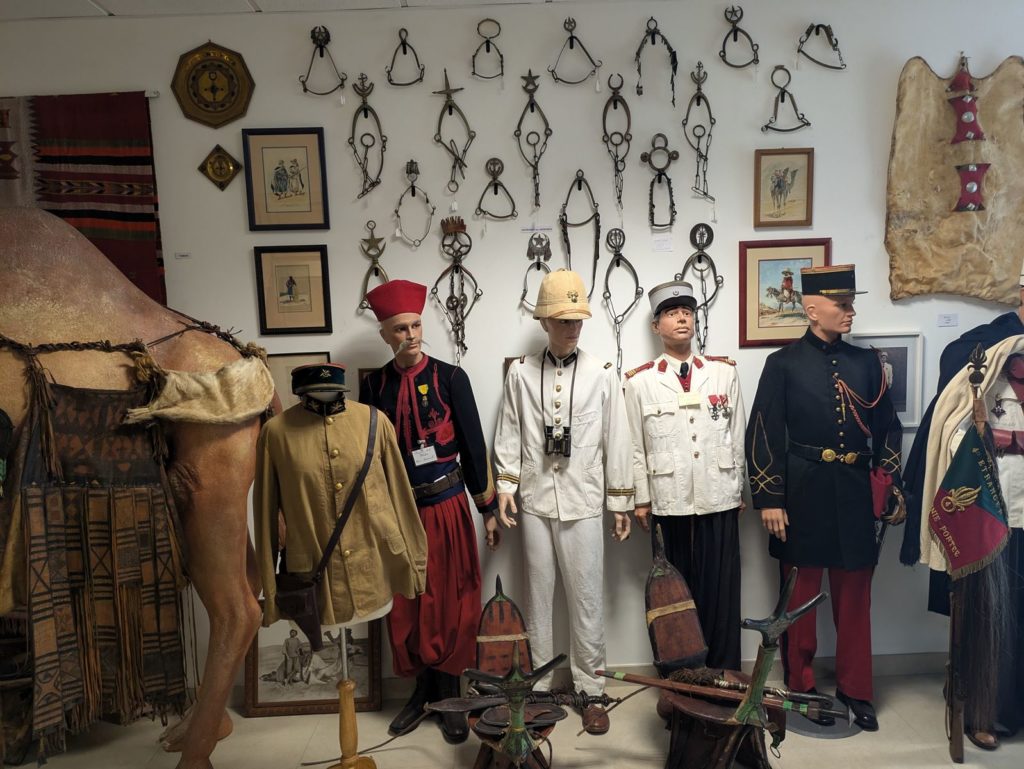
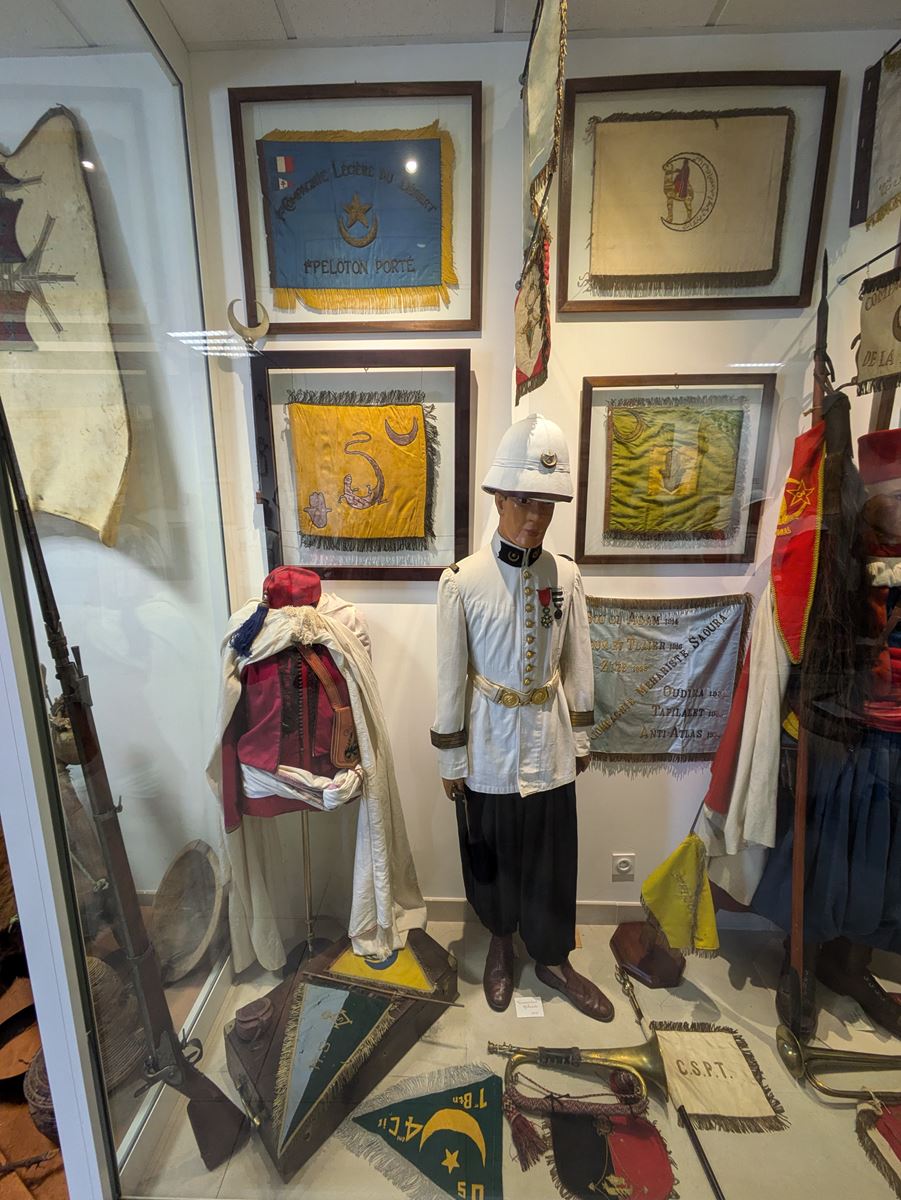
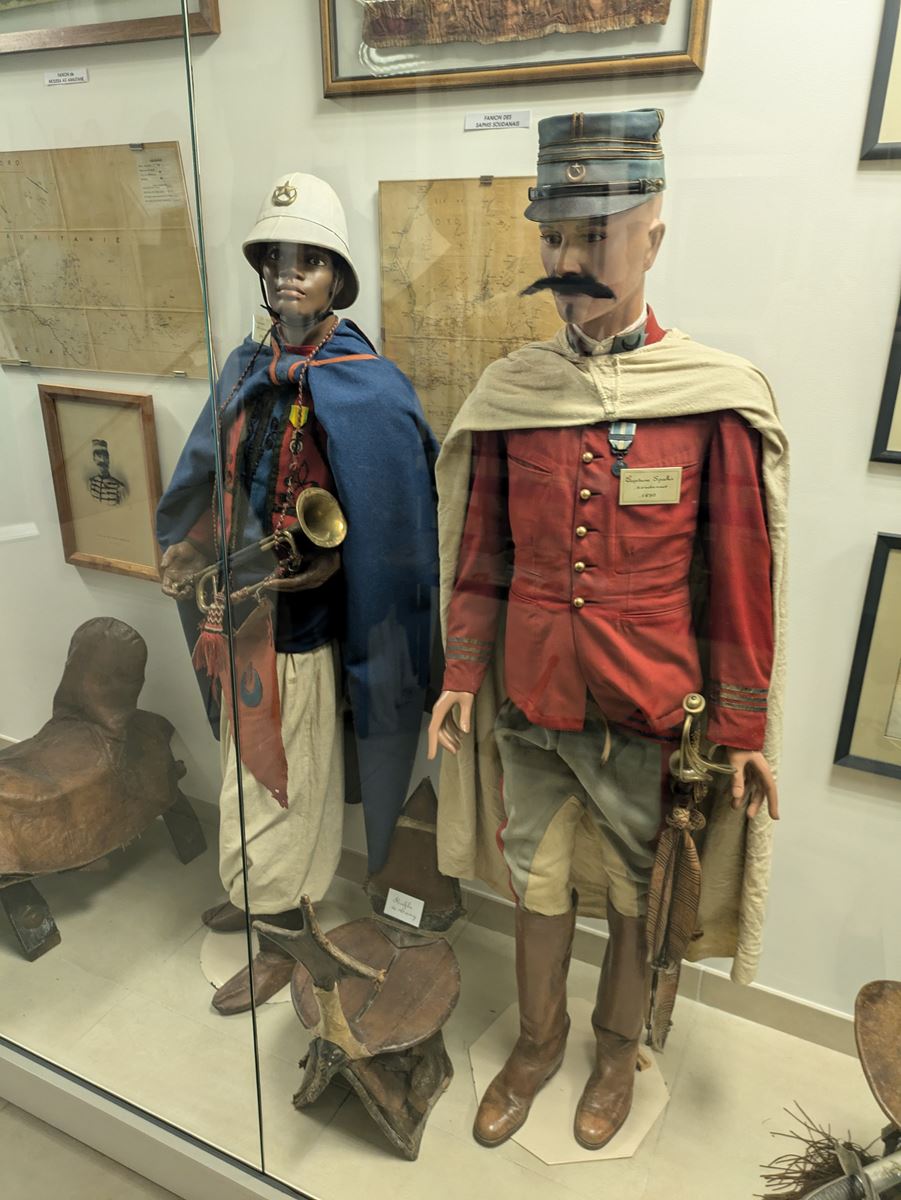
You can also view about twenty mannequins wearing uniforms associated with the French presence in the Sahara.
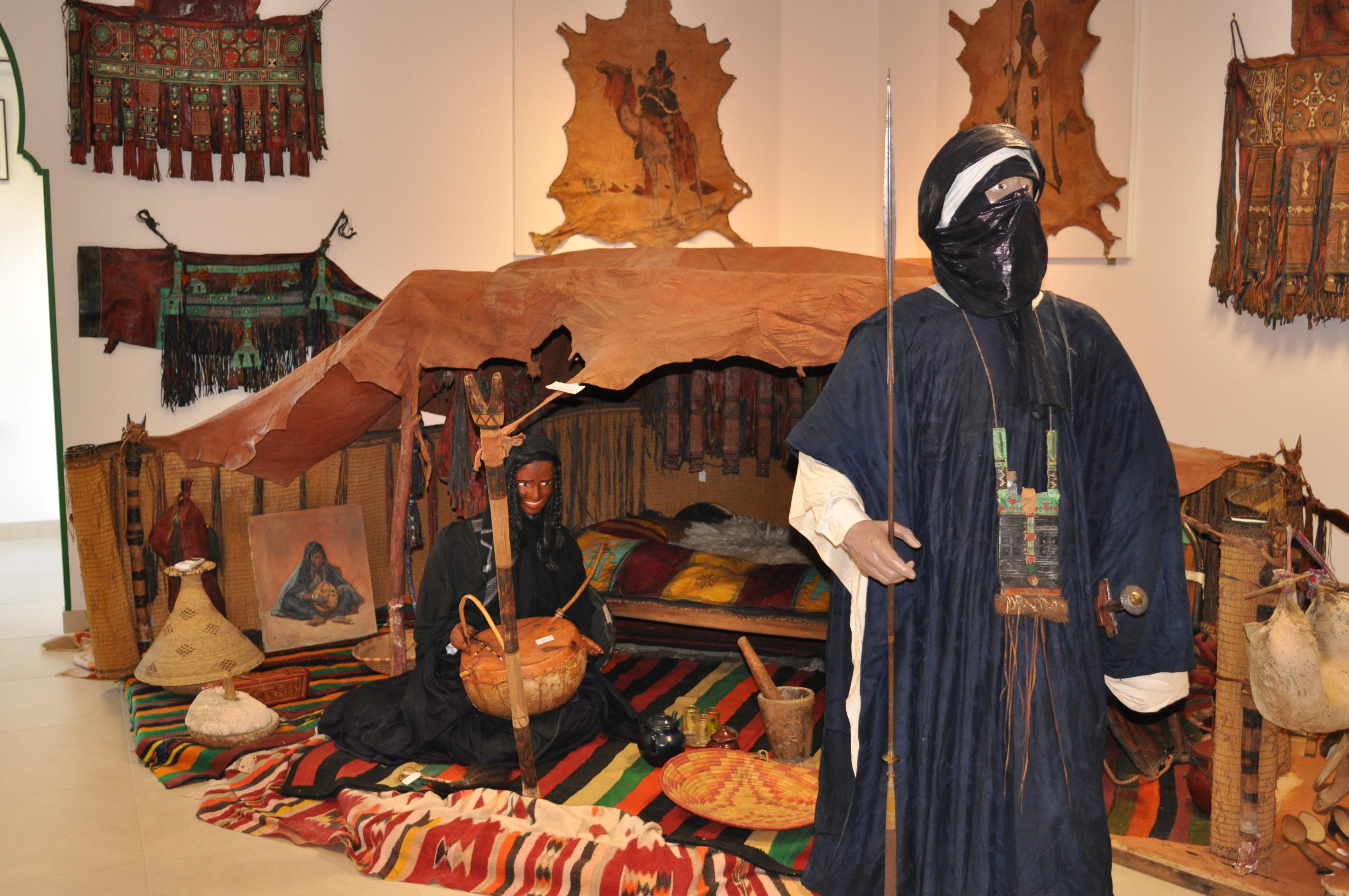
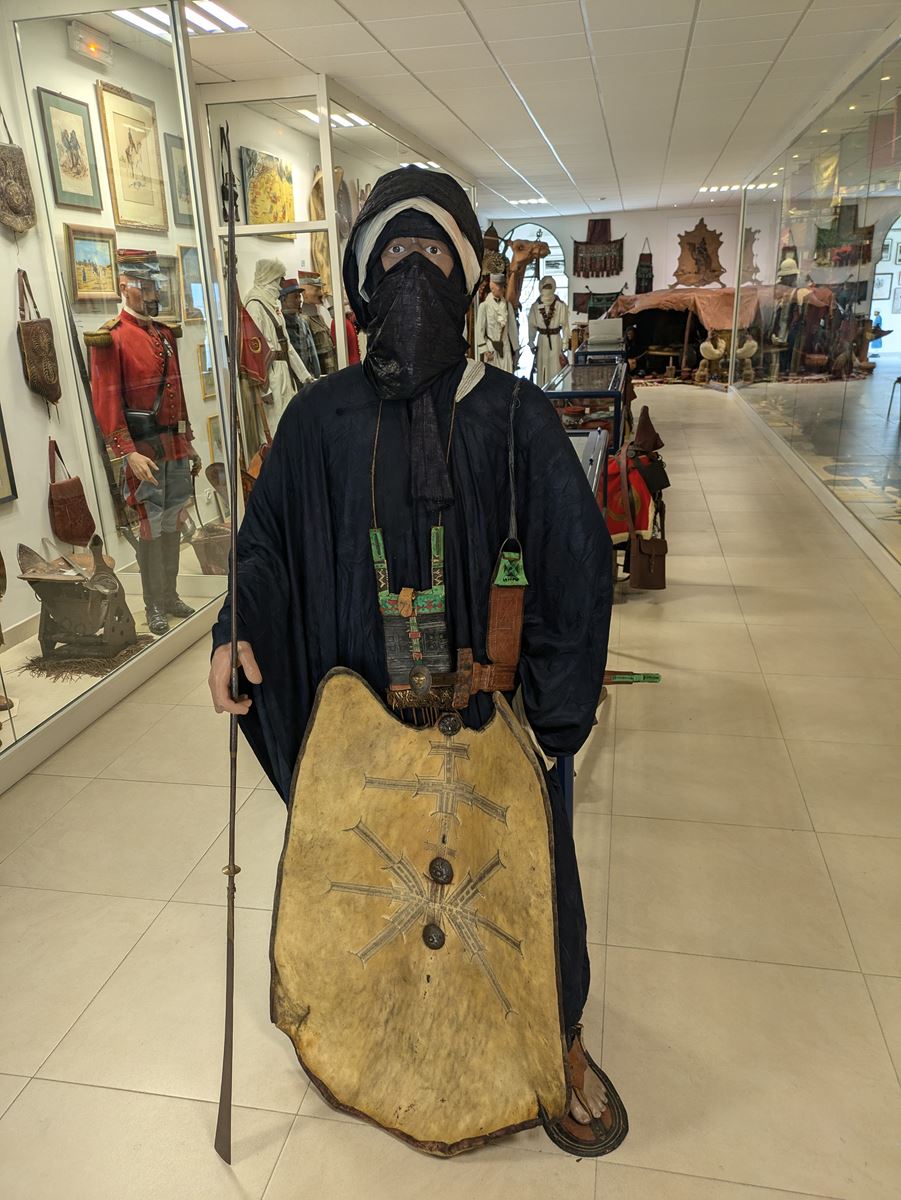
Officers and soldiers from metropolitan France, as well as Spahis, Goumiers, Arab Chambas from the north, and Tuareg camel riders from the Tassili.
La Rahla and Bernard Adell also display pennants from various camel-riding units, as well as oryx-skin shields used by the Tuaregs.
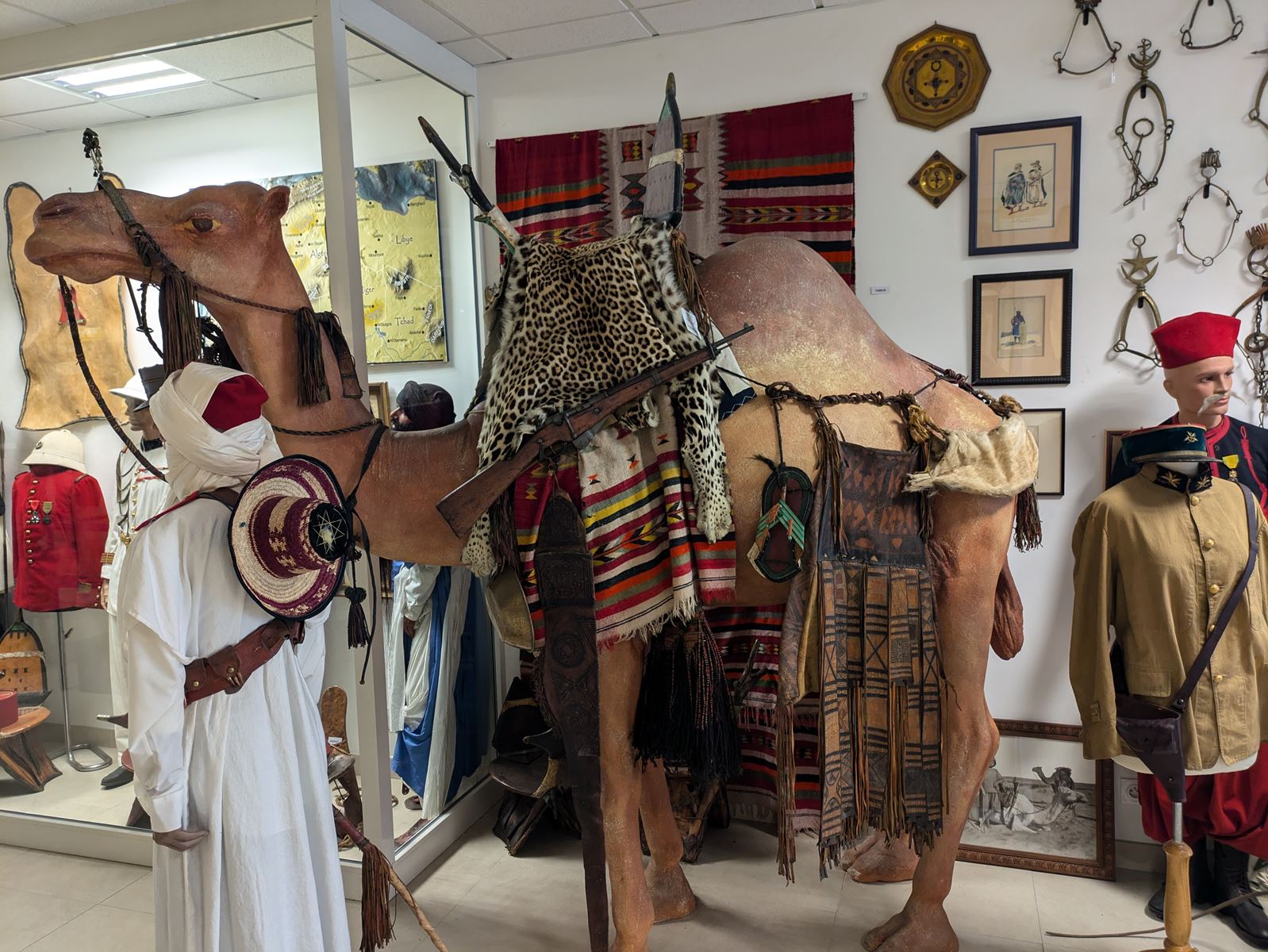
A life-size camel and a woman playing the imzad in front of a traditional Tuareg tent bring the exhibition to a close, instilling a sense of peace and serenity after these sometimes violent and always perilous eras.
On the lower level, a few photos by Alain Sèbe foreshadow the rest of the tour: Saharan ethnography and prehistory.
A rock art “wall” greets visitors, reminding them that the Sahara was once green and home to giraffes, lions, hippopotamuses, and ostriches. Several display cases feature artifacts from the Neolithic and Paleolithic periods, including grinding stones, polished or carved stones, arrowheads, and more.
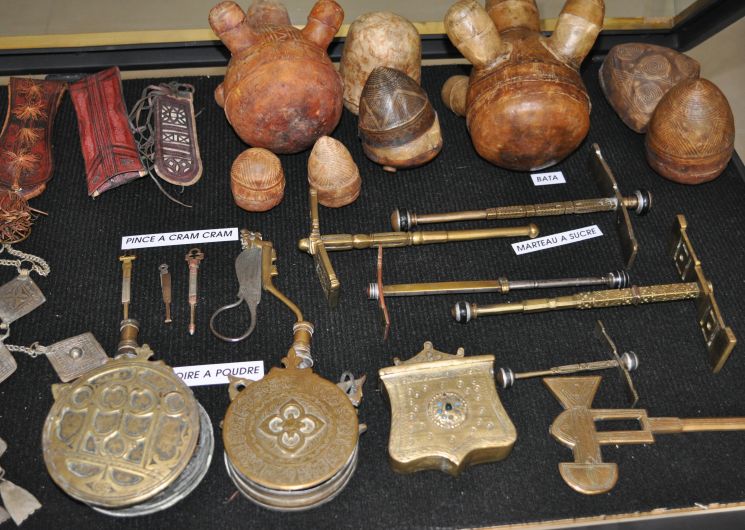
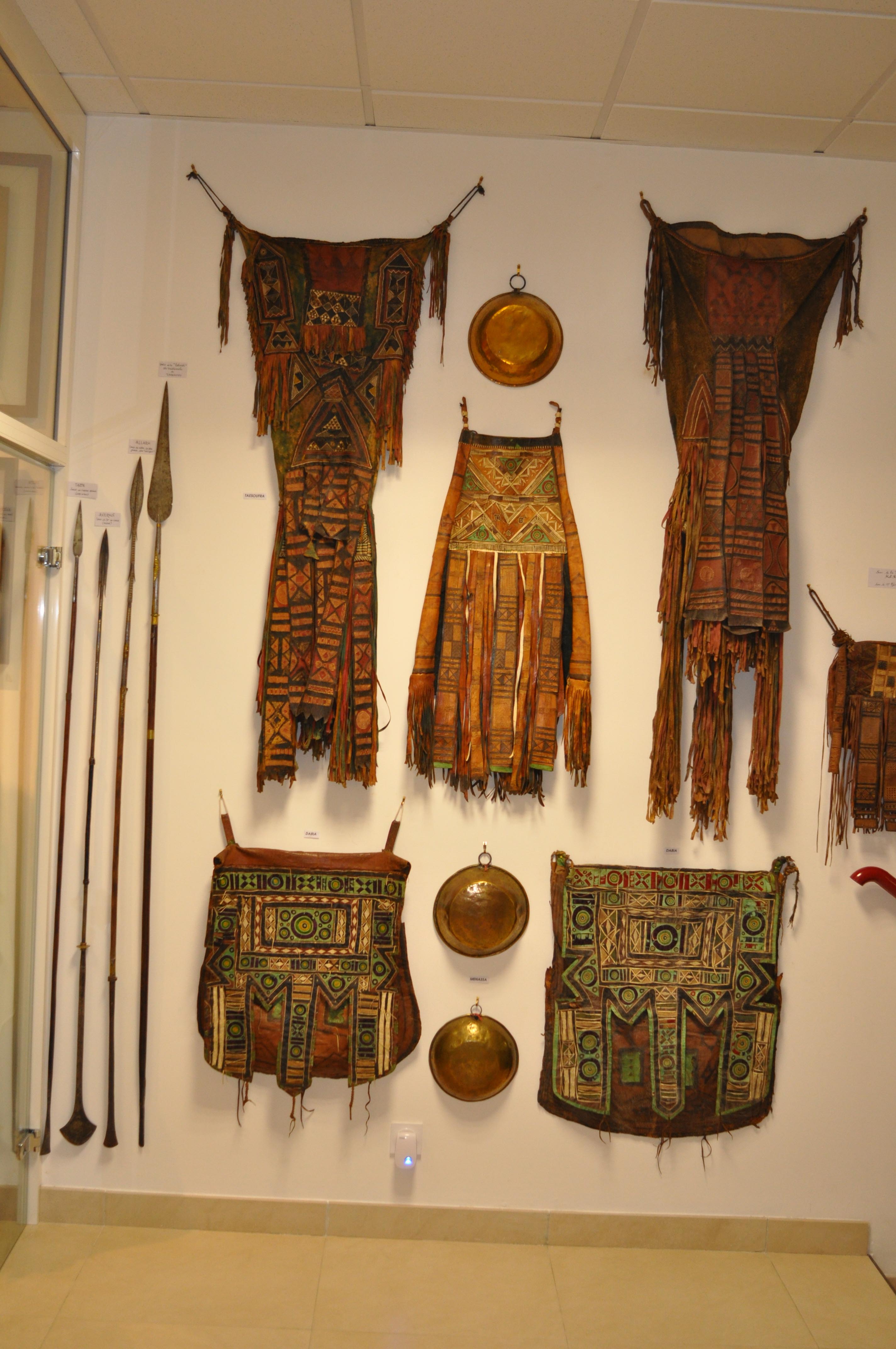
Next comes a look at daily life in the Sahara. The pure and timeless beauty of everyday objects: camel saddles and packsaddles, leather bags, sail cleats, padlocks, and weapons (spears, swords, and takoubas).
Thanks to donations and loans from his descendants, Théodore Monod occupies a significant portion of the room. Here, visitors can see his saddle, his gandourah, his backpack, his sandals, his walking stick, his famous leather briefcase, and, even more unusually, the last of his herbariums.
Thanks to the kindness of their families and loved ones, two other lovers of the Sahara, Henri-Jean Hugot and Maximilien Bruggmann, are now featured in two new display cases.
At the end of the tour, films are screened upon request in the large exhibition hall.
Open: Monday, Wednesday, Thursday, Friday, Saturday from 2:00 PM to 6:00 PM
Saharan Museum
1Bis, Avenue de Castelnau
34920 Le Crès
Tel.: 06 67 29 94 42 and 04 67 72 56 13
musee.saharien@gmail.com
Translated with DeepL.com
(free version)