


On the borders of the Dordogne and the Haute-Vienne, Pompadour is famous for its horses and in particular for being the cradle of the Anglo-Arab breed.
But Pompadour is also a castle that should be discovered.
The castle...
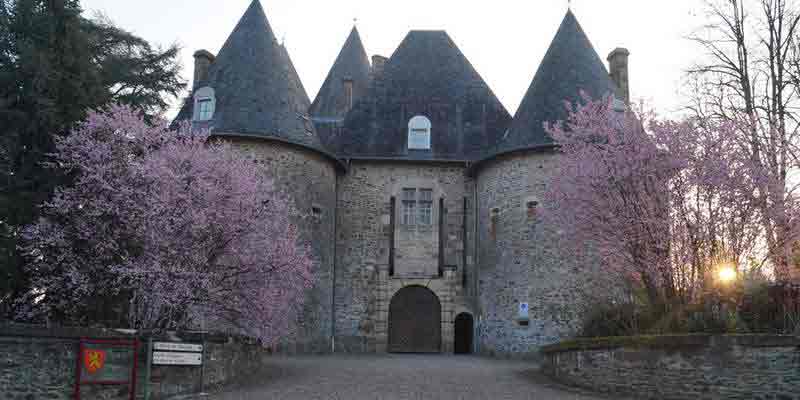
During the seigniorial wars, the castle of Pompadour was a stronghold because of its strategic position between Brive and Limoges. Coveted by the local lords, the ancient fortress resisted attacks from 1026 to 1199. Burned down around 1200, it was totally destroyed during the troubles that followed the death of King Richard the Lionheart in Chalut in 1199.
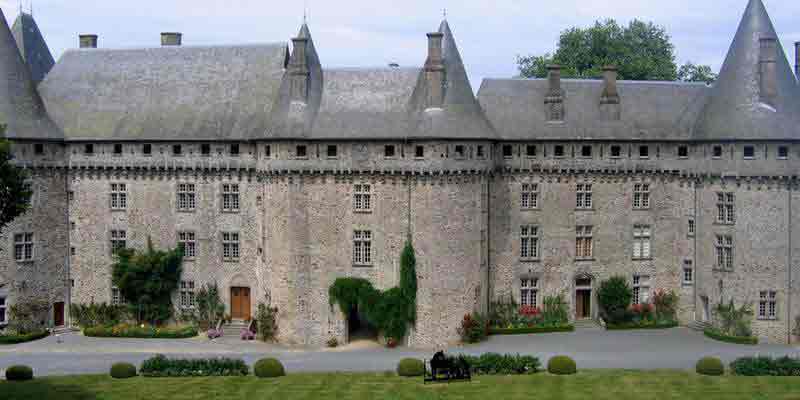
Rebuilt in the 15th century on the feudal mound, the castle of Pompadour was reworked in the 18th century. It was given in 1745, with the title of Marquise, to the famous favorite of Louis XV, Madame Lenormand d'Etiolles, born Jeanne Antoinette Poisson who then took the title of Marquise de Pompadour.
It was she who created the first stud farm on the site in 1751.
Partly destroyed during the Revolution, it suffered a fire in the 19th century. In 1761, Louis XV recovered the stud farm which became royal but for a short time since the stud farms were suppressed during the French Revolution. It was Napoleon I who re-established the imperial stud farm in 1806 which became national in 1872.
During the visit of the castle, you can discover the dining room of the former director with Vermont earthenware, his bedroom with furniture of empire style restored by the formation of cabinet making of art of the AFPA of Limoges or his office decorated with a splendid bookcase realized to measure in 1865. Don't hesitate to enter the tapestry room or the exhibition rooms in the castle. Several watchtowers surround the castle. Of the ten original towers, only nine remain. The tenth one, on the north side, was destroyed under Napoleon I to build the Orangery. To see also the well and the mausoleum...
The National Stud...
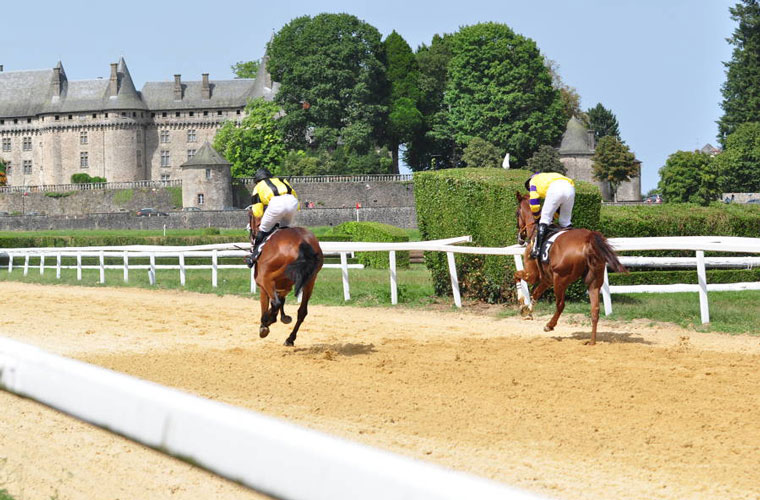
From the windows of the castle, you will have an impregnable view on the racecourse of Pompadour.
With the stud farms, you will discover a whole world... traditional clothes, stud-book, unusual objects...
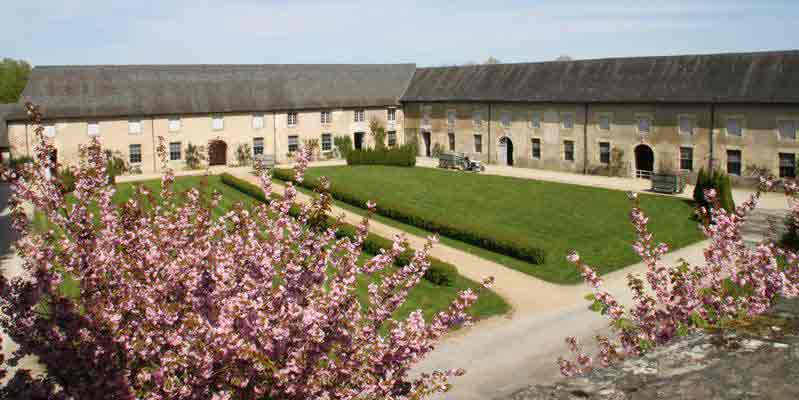
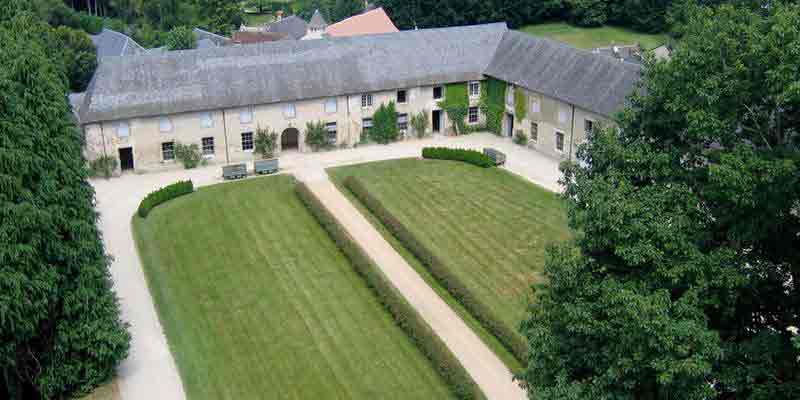
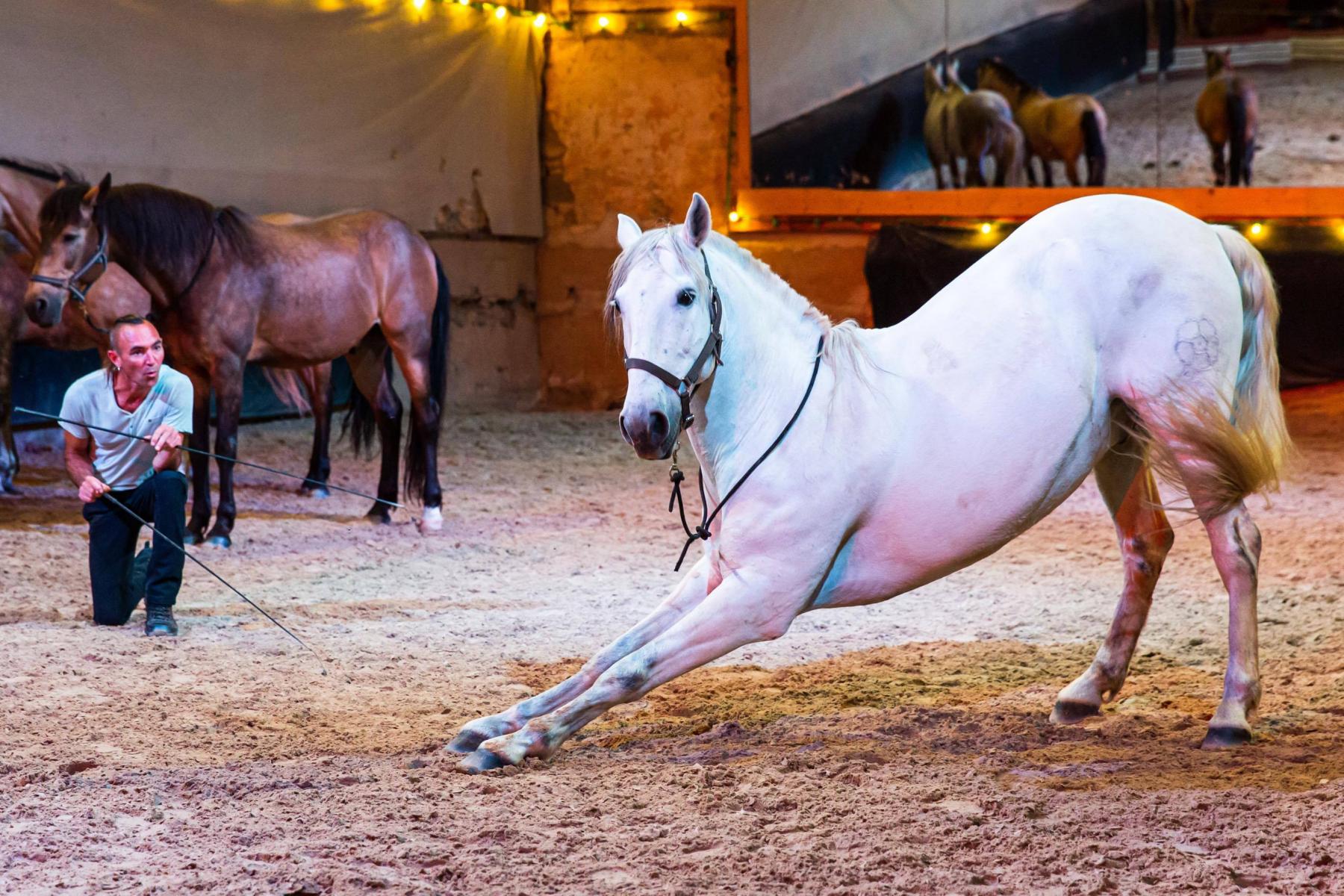
And also, the stables of the Marquise and the Orangery which house horses of artists in residence, heavy horses, several Anglo-Arabs and two presidential horses, entrusted to the good care of the agents of the National Stud. At the back of the Marquise's stable, horse-drawn carriages are on display. The visit ends with the Orangery riding school which houses the shows produced by the association.
Located 2 km from the château, the Chignac estate and its stud farm—unique in France as the last remaining state-run stud farm—is home to some sixty Arabian and Anglo-Arabian horses, as Pompadour is the heartland of this breed.
In Chignac, you can see the mares and their foals roaming freely.
Combining French history with equestrian heritage, you can explore Pompadour through guided tours, equestrian shows and cabarets, seasonal events, dramatized walks, and many other activities scheduled throughout the year.
Castle of Pompadour
Tourist Office of the Country of Pompadour
Entrance of the Castle
19230 Arnac-Pompadour
Tel : 05 55 98 55 47
Translated with www.DeepL.com/Translator
(free version)