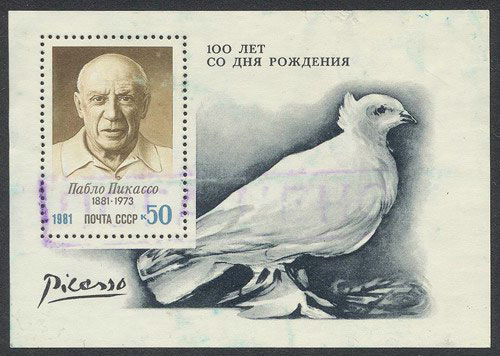
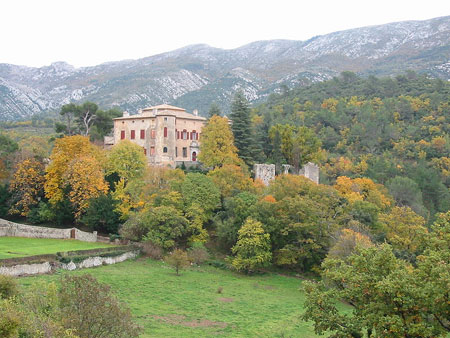
Pablo Picasso is buried at the Château de Vauvenargues in the Bouches-du-Rhône department. Built on the site of a Roman settlement, the château came under the control of the Counts of Provence and later the Church of Aix. It is linked to the legacy of the famous King René, who gave the château and its lands to his personal physician, Pierre Robin d’Angers, in 1474.
Through the marriage of François de Clapiers to Marguerite de Séguirand in 1548, the estate belonged to the de Clapiers family for two and a half centuries. Two years after the Great Plague of 1720, to thank Joseph de Clapiers, consul of Aix, for his dedication during the epidemic that decimated the population, King Louis XV elevated the lands of Vauvenargues to the rank of a marquisate.
The château was sold in 1943, stripped of its furnishings, and passed through various hands—notably those of the Association for the Management of the Navy’s Social Welfare Programs—before being purchased in September 1958 by Pablo Picasso, in whose garden he is buried alongside Jacqueline Picasso.
The château, furnished and decorated by the artist, has since belonged to Catherine Hutin-Blay, Jacqueline’s daughter and Picasso’s heir, and is not open to the public, except under special circumstances.
It was listed in the Supplementary Inventory of Historic Monuments by decree dated January 15, 1929.
Château de Vauvenargues
4, rue René Nicol,
13126 Vauvenargues
Tel.: 04 42 38 11 91
https://www.archives13.fr/documents-du-mois/document-le-chateau-de-vauvenargues-derniere-dem