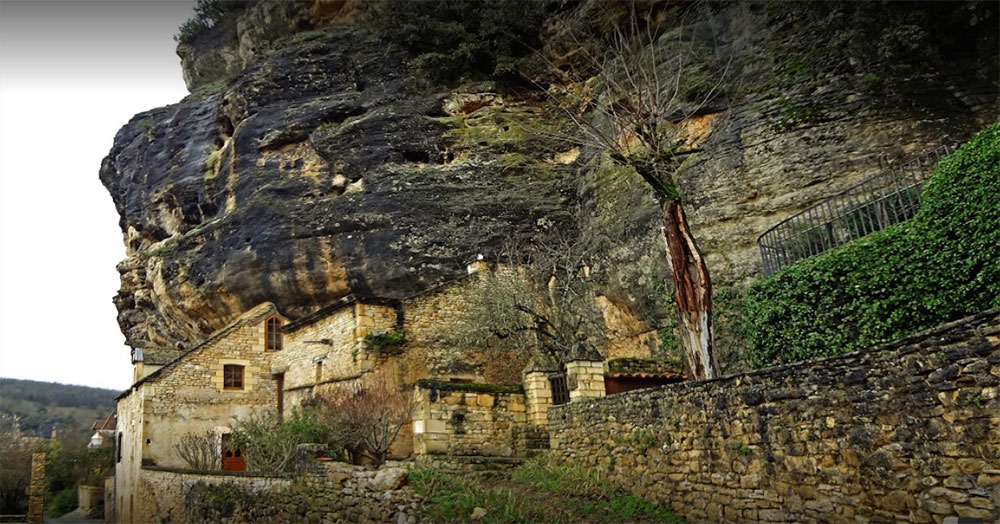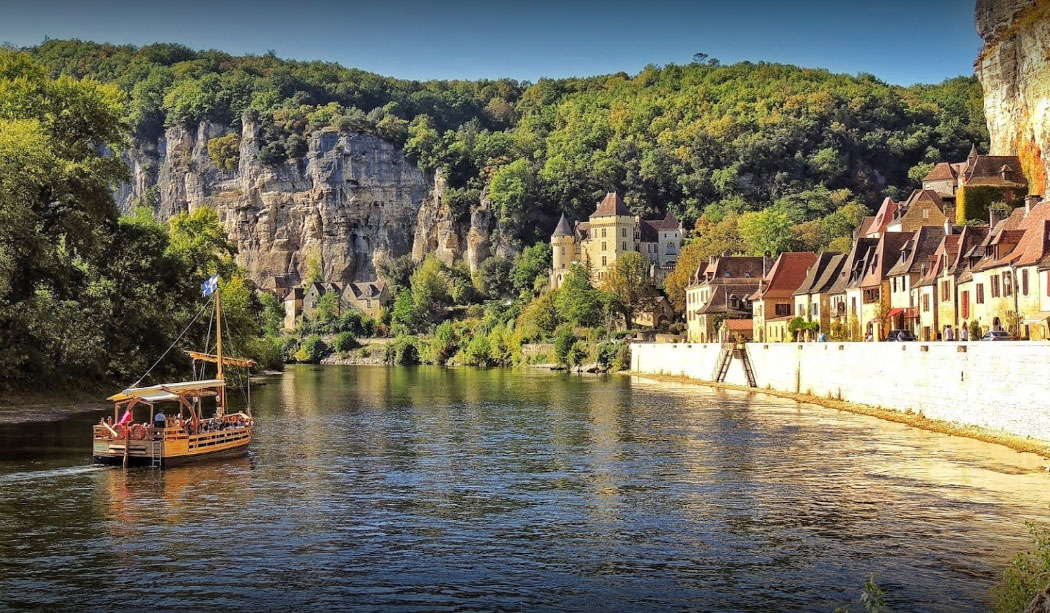
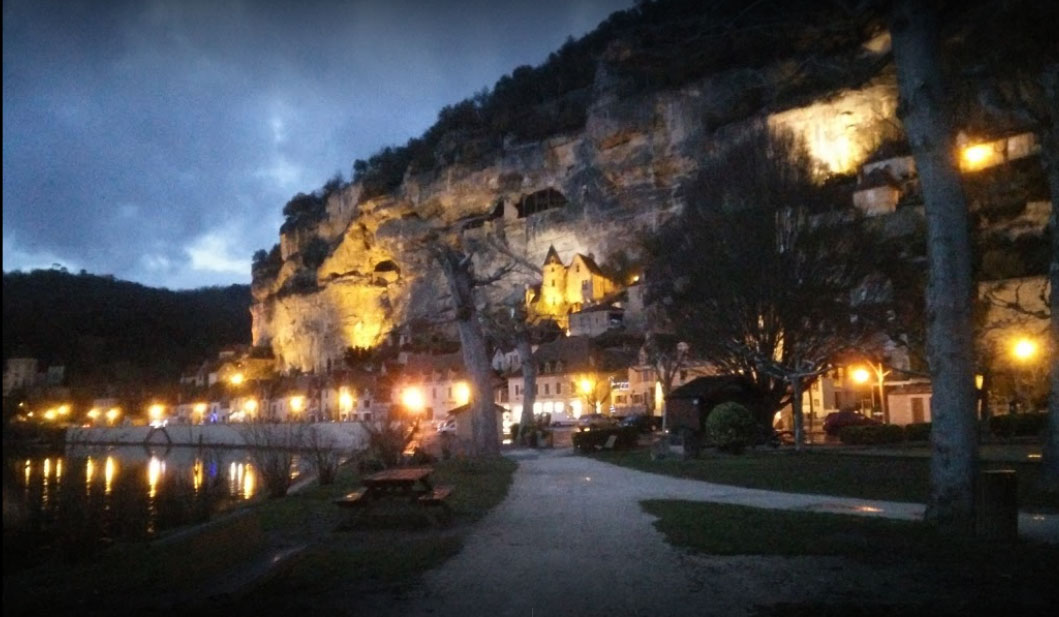
Everything here is troglodyte.
The church and the fort are troglodyte... and if the houses aren't, they're built into the cliffs.
We're in the Périgord Noir.
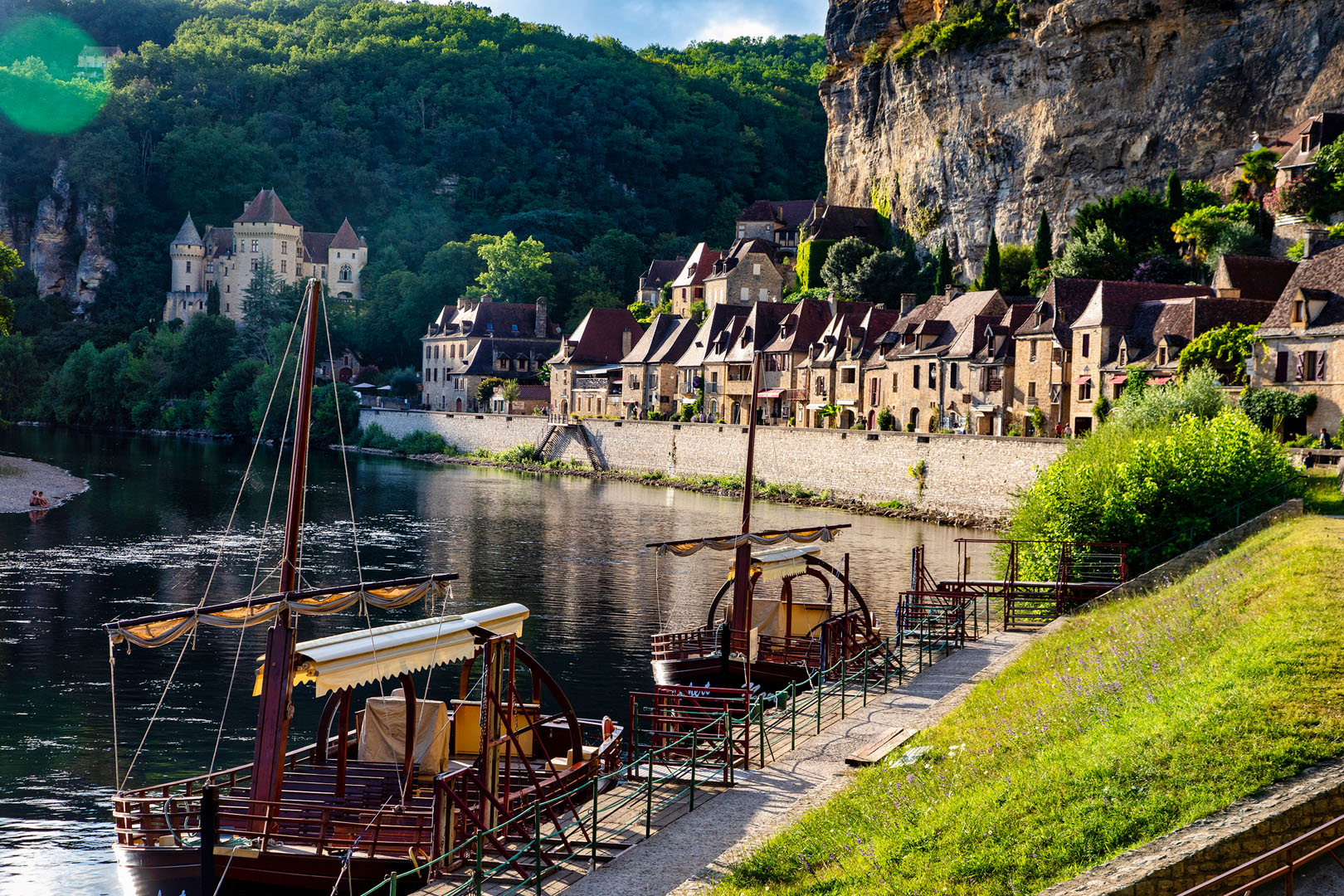
The roofs are of lauzes or brown tiles.
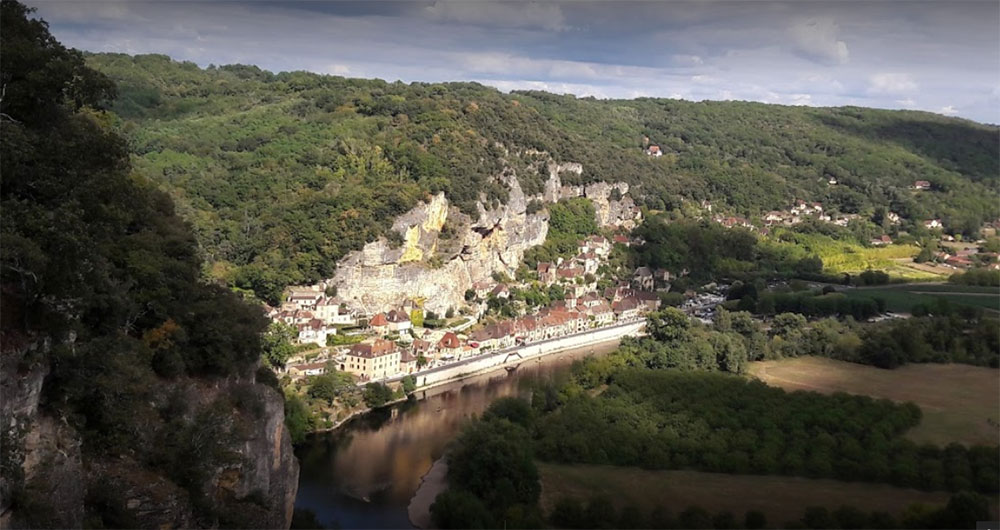
The village lives between river and cliff.
In the Middle Ages, La Roque-Gageac had a population of 1,500.
Back then, the Dordogne provided a livelihood for fishermen and gabariers in the port.
The church, covered in lauzes, remains from this period.
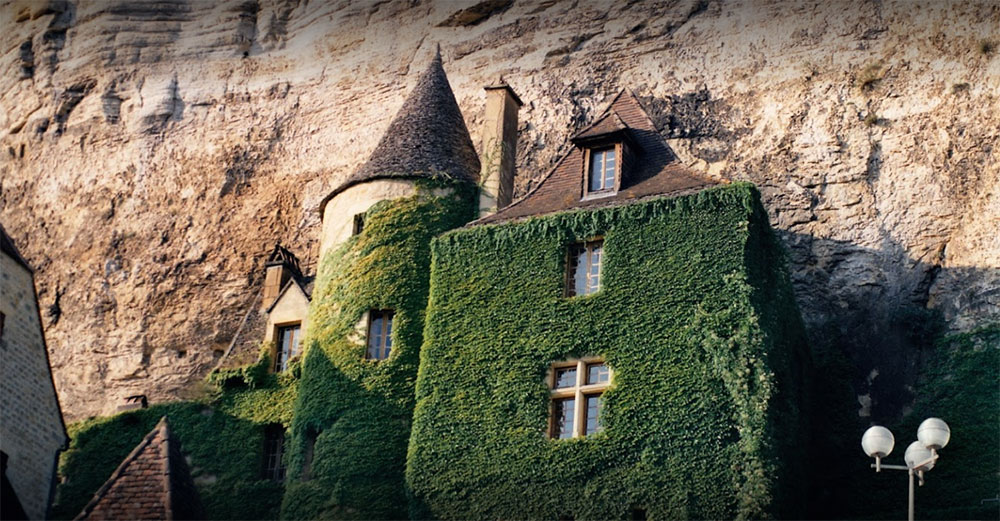
Not far away, flanked by a round tower, stands the manor house of the Tarde family, friends of Galileo.
During the Hundred Years' War, La Roque-Gageac welcomed the bishops of Sarlat, whose residence at the far end of the village has been preserved.
Overlooking the houses, the remains of the castle still defy time...
Just a stone's throw from some of the finest castles in Périgord, La Roque-Gageac is a must-see.
A remarkable heritage...
The troglodyte fort and remains of the castle can still be seen in the upper part of the village. The fort, probably built in the 9th or 10th century, defended the castrum. Sheltered from a possible attack from the top of the cliff by the overhanging ledge, the fort was not a place of residence, but rather a place where guards took it in turns to keep watch over the surrounding area. Today, large concrete pillars support its ceiling following a landslide in January 2010.
The remains of the bishops' castle are barely visible beneath the troglodyte fort.
Manoir de Tarde. This handsome building with its tower was erected in the 16th century on a gateway to the castrum. It bears the name of one of La Roque-Gageac's oldest families, which produced the famous canon Jean Tarde (1561-1636), a friend of Galileo, as well as a mathematician, physicist, astronomer, geographer and historian.
Saint-Donat church. Originally a chapel, it became the parish church of La Roque-Gageac after the Wars of Religion, the Saint-Donat church on the plain having been destroyed at the end of the 16th century.
The "Maison des Sœurs", at the western entrance to the village, was built in 1805 by a ship's master. In 1876, this important building became the religious school of La Roque-Gageac, following a special donation to the Congregation of the Sisters of the Sacred Heart of Jesus. It was used as a school for many years.
The Château de la Malartrie, although located in the neighboring commune of Vézac, is part of the La Roque-Gageac scenery. It was built at the very beginning of the 20th century on the site of a former bourgeois house.
And let’s not forget the exotic, unique garden nestled between the cliffs and the river, featuring a variety of plant species and vibrant colors. Palm trees, olive trees, banana trees, bougainvilleas, orange trees, pomegranate trees, lemon trees, and oleanders...
Visiting the gardens is free of charge.
La Roque-Gageac Town Hall
5, place de Tarde
24250 La Roque-Gageac
Tel. : 05.53.29.51.52
Translated with DeepL.com
(free version)