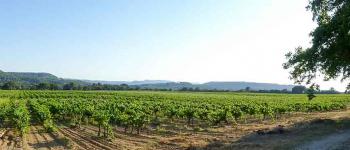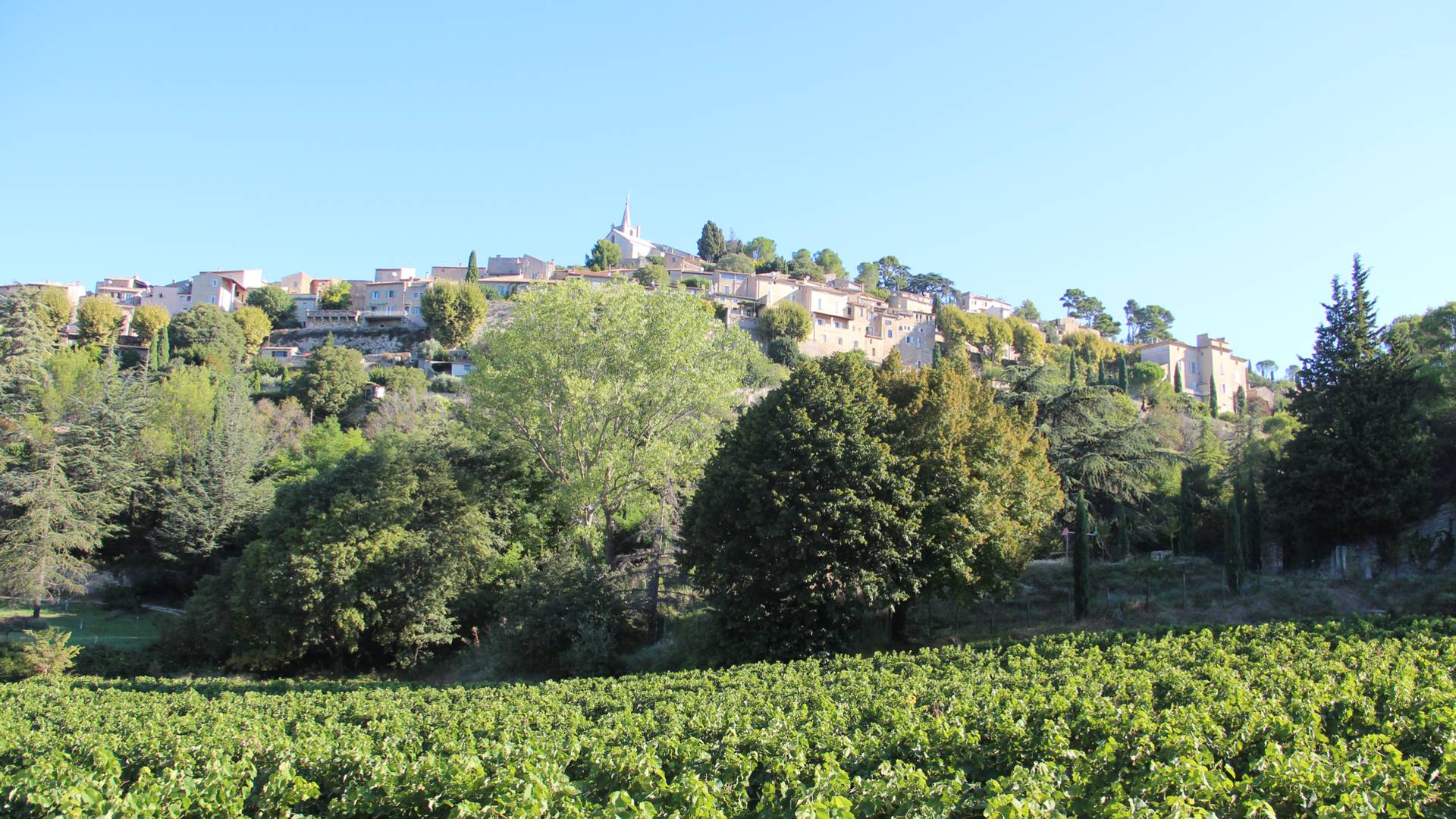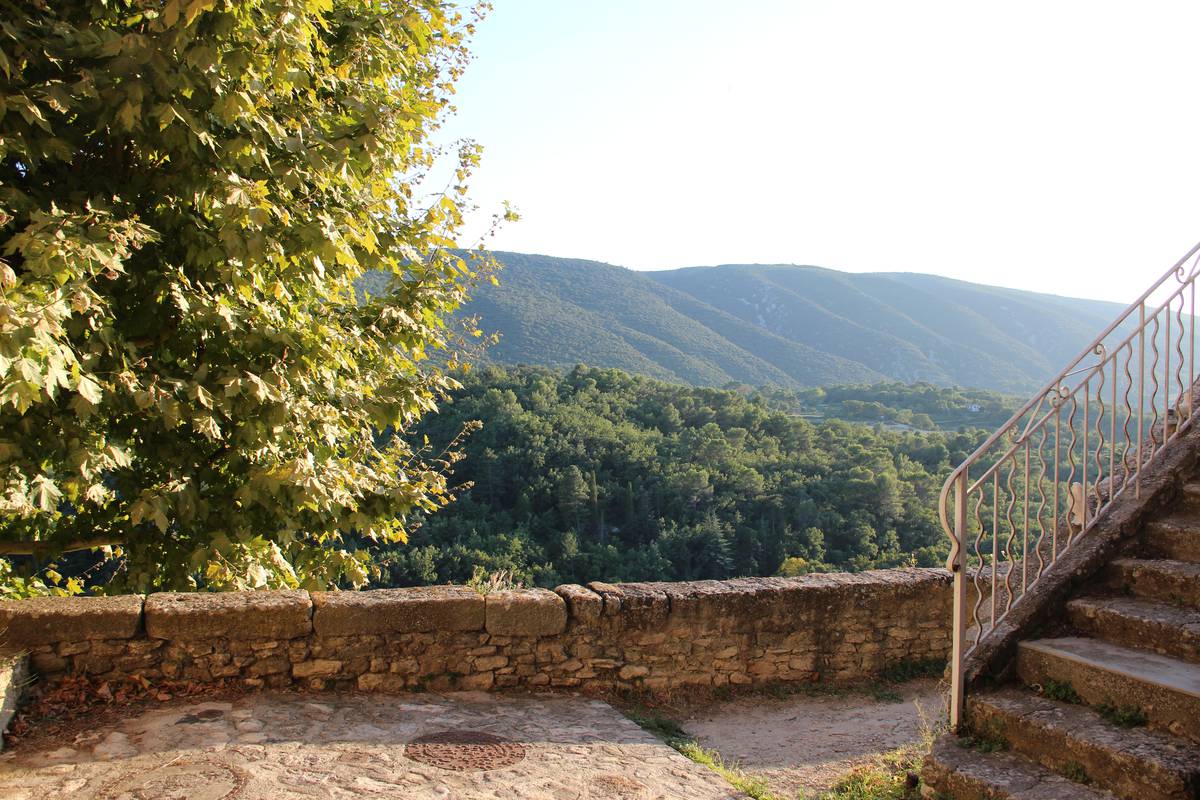

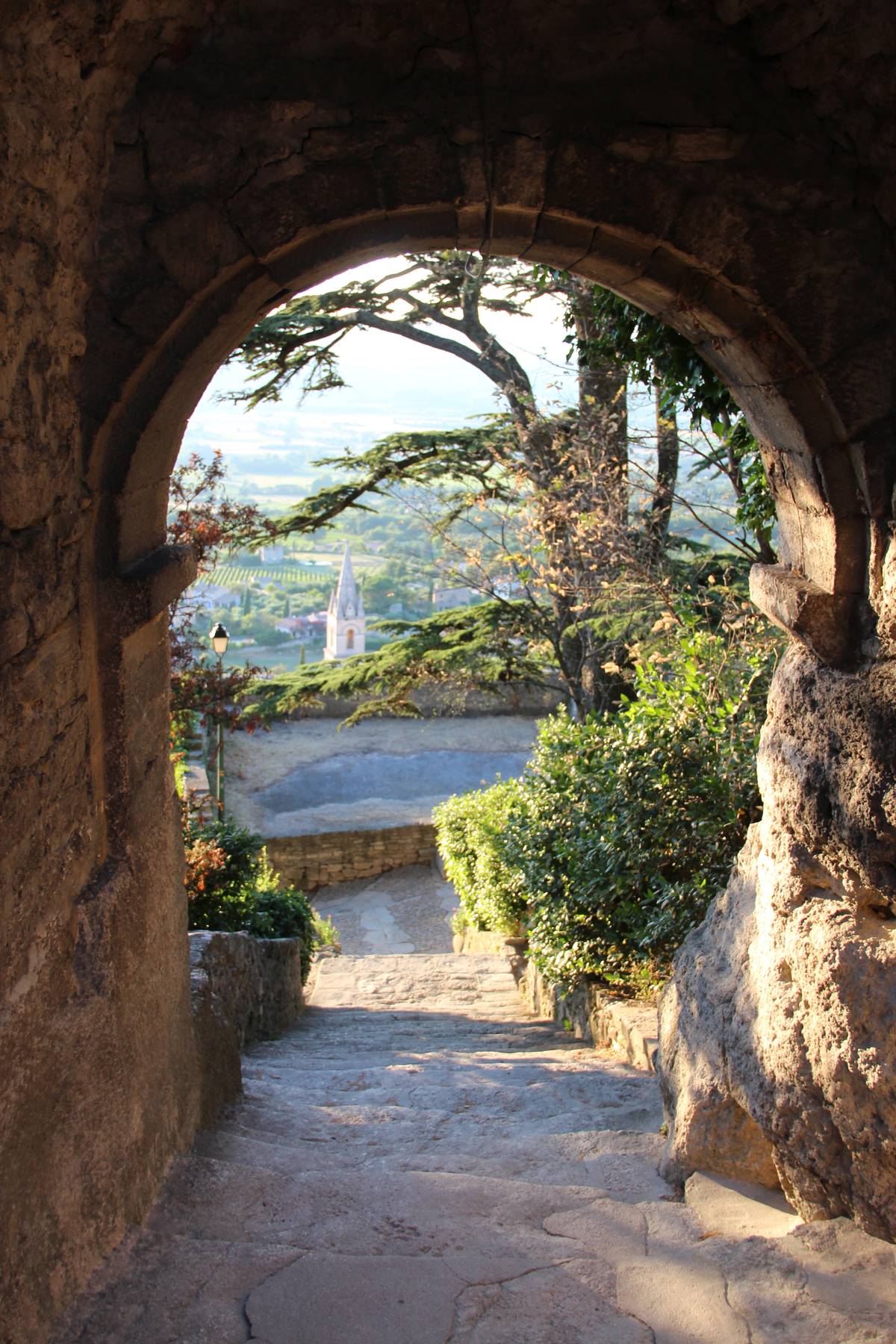
A typical hilltop village in the Vaucluse region, Bonnieux offers visitors an exceptional panoramic view of the Vaucluse and Ventoux mountains. It exudes incredible charm and boasts a well-preserved heritage.
Visitors can admire a 12th-century church, the remains of 12th-century ramparts and towers, the Pont Julien—a Roman bridge dating back to 3 BC—as well as, among more recent structures, the famous Philippe Tower, built in the 19th century by Philippe Audibert with the audacious goal of seeing the sea from the Luberon.
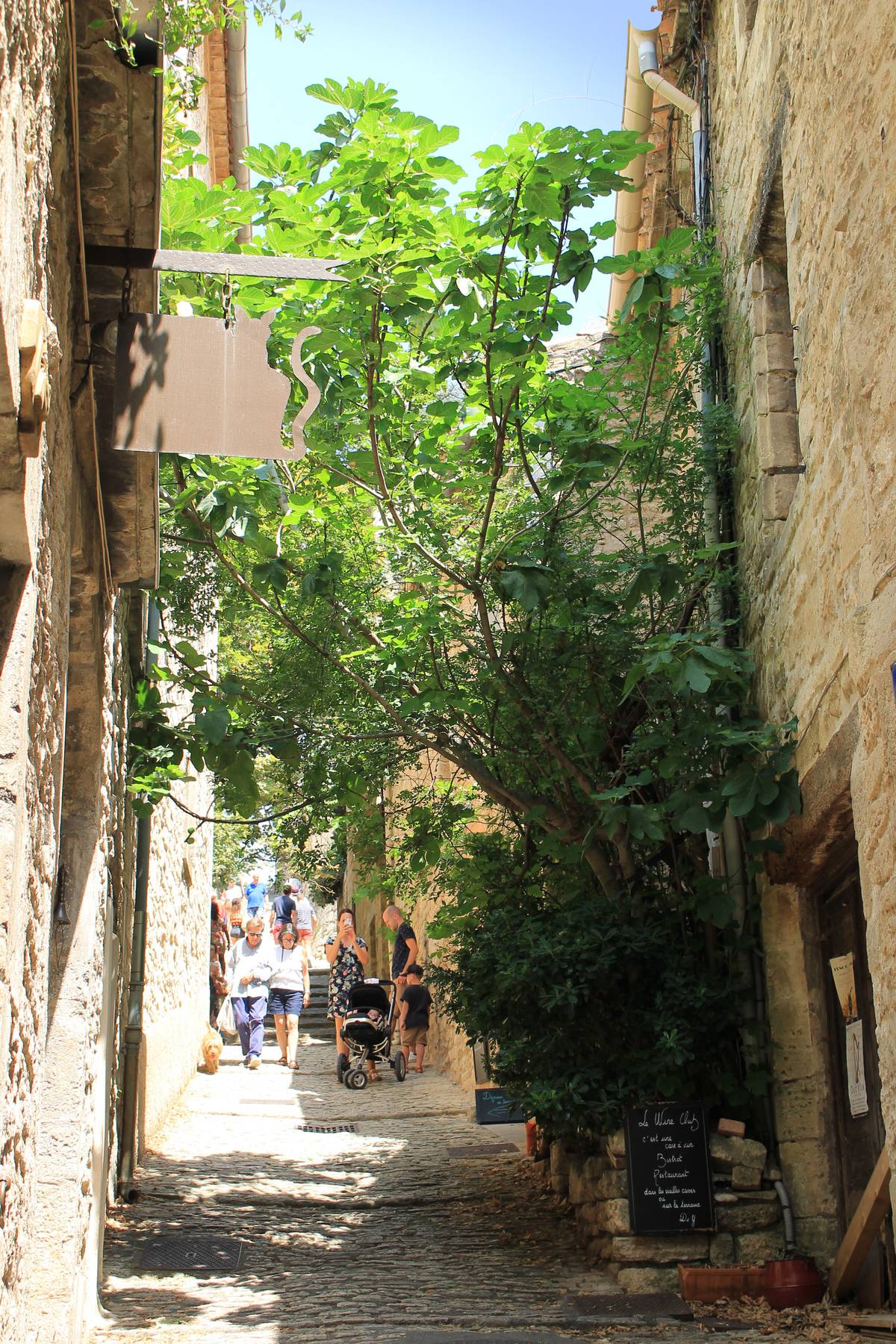
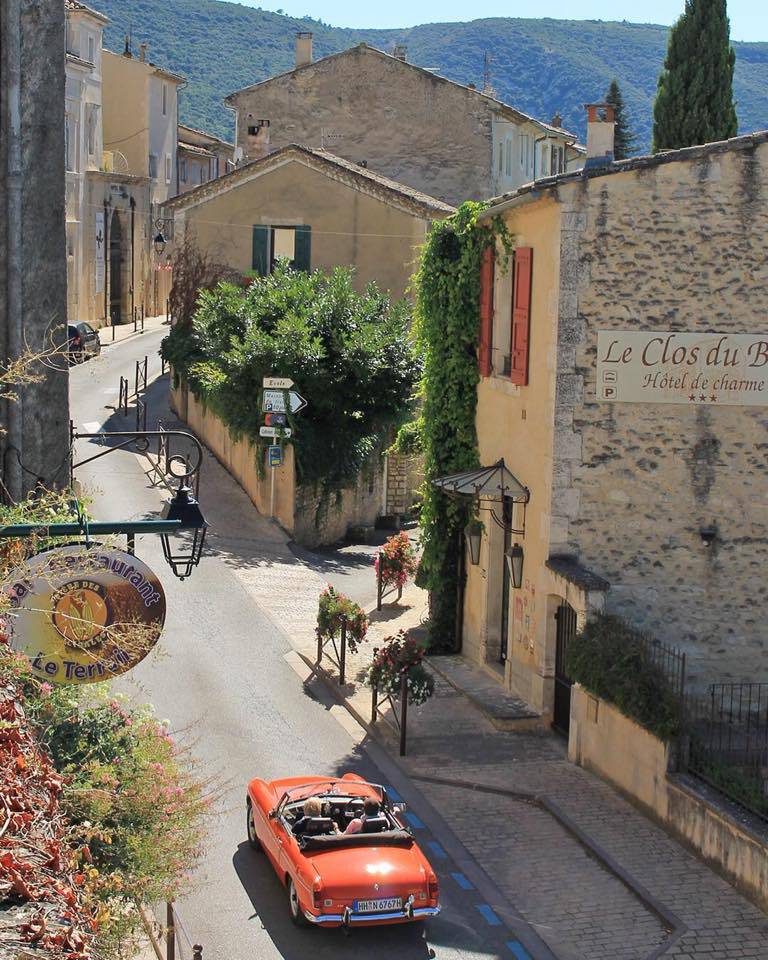
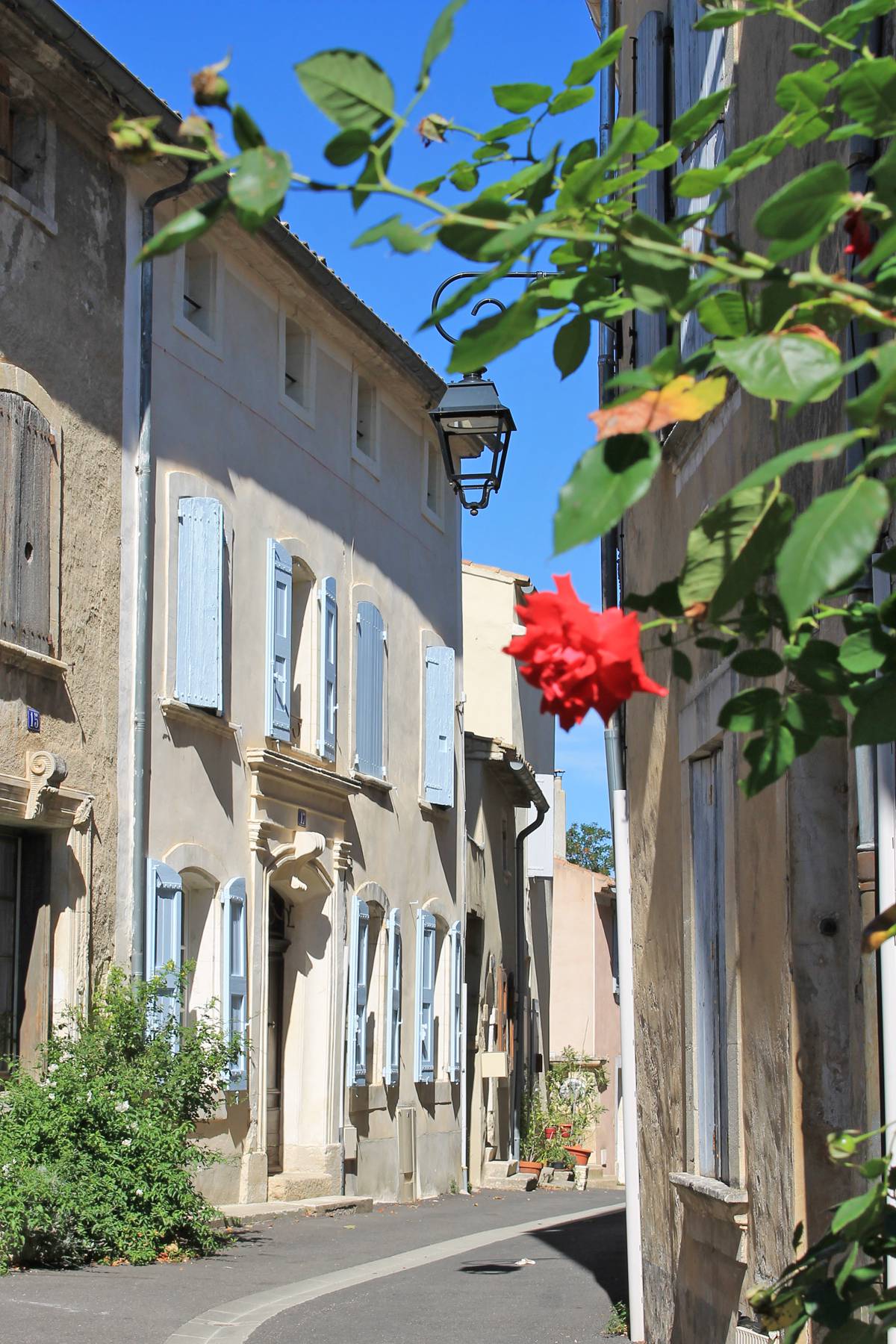
Visiting Bonnieux means wandering through its steep, narrow streets lined with houses typical of the region, as well as reminders of times past, charming fountains, and wash houses.
Fifteen panels tracing the history of Bonnieux mark a heritage trail through the village.
Such a rich heritage…
The Pont Julien, 5 km from the village, is a Roman structure built along the route of the Via Domitia.
It has withstood the test of time, history, and the Calavon River’s many floods. Its state of preservation makes it the most beautiful Roman bridge in Provence.
The Philippe Tower, located near the Route des Cèdres, is a strange monument visible from many points in the Luberon, rising up around a bend in the road. This curious, isolated tower, 30 meters high, was built by a native of Bonnieux, Philippe Audibert. A dreamer, around 1885 he began erecting this neo-medieval tower because he wanted to see the sea from his home. He died suddenly and was unable to complete his project. Faced with the expense, his brother-in-law, the tower’s heir, did not want to build any higher, but still had the structure crowned.
On a clear day, you can see the Étang de Berre from the top of the Philippe Tower. A dream partly fulfilled!
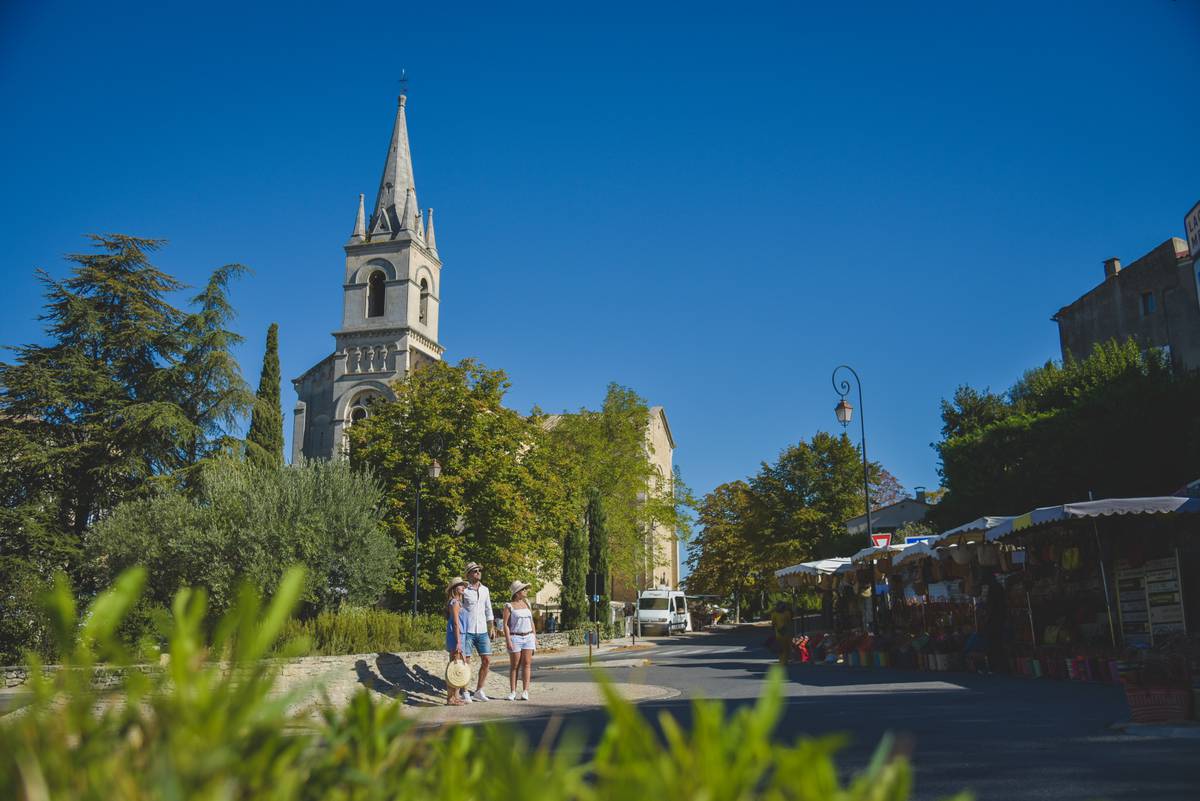
The New Church, built at the end of the 19th century on the “Pra de Bourg.” Shaped like a Latin cross, the building houses four 16th-century altarpieces from the Upper Church depicting scenes from the Passion of Christ: the Flagellation, the Crowning with Thorns, Christ before Pilate, and Jesus Carrying the Cross. Also worth noting are the fleur-de-lis stained-glass windows and the sculptures.
The Old Church or Upper Church, open only in summer and at Christmas for the nativity scene. This 12th-century church overlooks the village of Bonnieux from a height of 425 meters. A blend of Gothic and Romanesque styles, it has been classified as a Historic Monument since 1980.
The Louise Bourgeois Church, formerly the Récollets Chapel or Couvent d’O, which displays works by the artist Louise Bourgeois: a holy water font, a confessional, a Virgin Mary statue, a crucifix…
Rue Droite, a cobblestone street lined with old mansions, featuring a wheel fountain and remnants of ramparts. Often overlooked, this street is one of the oldest in the village.
Rue des Pénitents Blancs
Thanks to its magnificent stone staircases, it leads to the Bonnieux viewpoint, where you can admire the stunning sunset.
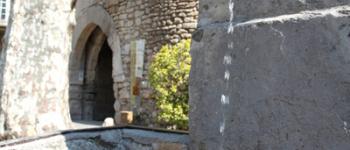
The Medieval Gate, the Porte du Castellas, also known as the Portail des Chèvres. Located east of the castrum, it was likely the only entrance. On the exterior, the structure features fine masonry of well-cut stones assembled around the gate, which consists of a triple arch.
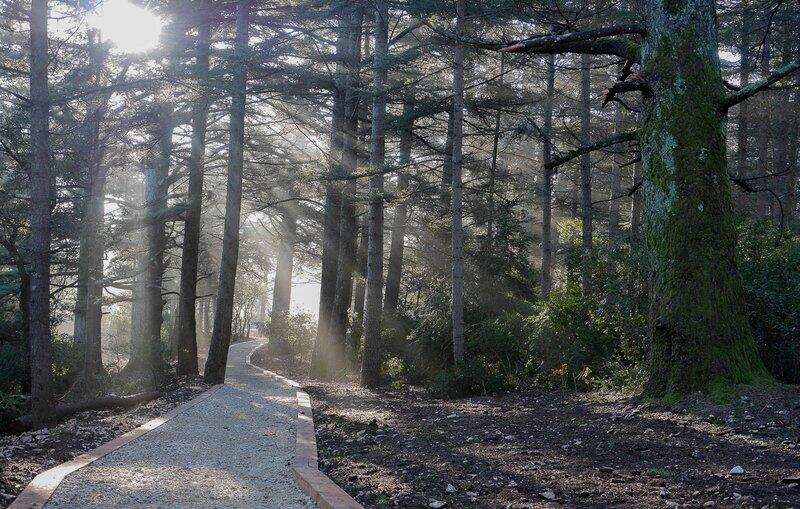
Also worth seeing is the magnificent Forest of the Cedars, situated on the ridge of the Petit Luberon between the villages of Bonnieux and Lacoste.
Just like the Jean-Paul Blachère Corporate Foundation, which since 2004 has sought to contribute to Africa’s development by supporting contemporary art and promoting its artists. In its art center, located at the heart of the company’s industrial zone, it hosts exhibitions and welcomes artists-in-residence.
Don’t miss the Christmas nativity scene, on display from late November to late January. Every year, Vincent Gils recreates 19th-century Provençal life through a nativity scene featuring a collection of 30 santons, all dressed in the traditional colorful costumes of Provence.
Finally, every Friday morning, the Place du Terrail in the heart of the village hosts a market where local artisans and producers sell their goods.
The Bonnieux cemetery is the final resting place of Maurice Ronet.
Pays d’Apt et Luberon Tourist Office
11, Rue Victor Hugo
84480 Bonnieux
Tel.: 04 90 75 91 90
www.luberon-apt.fr
Bonnieux Town Hall
Rue J.B. Aurard
84480 Bonnieux
Tel.: 04 90 75 80 06
www.bonnieux84.fr/