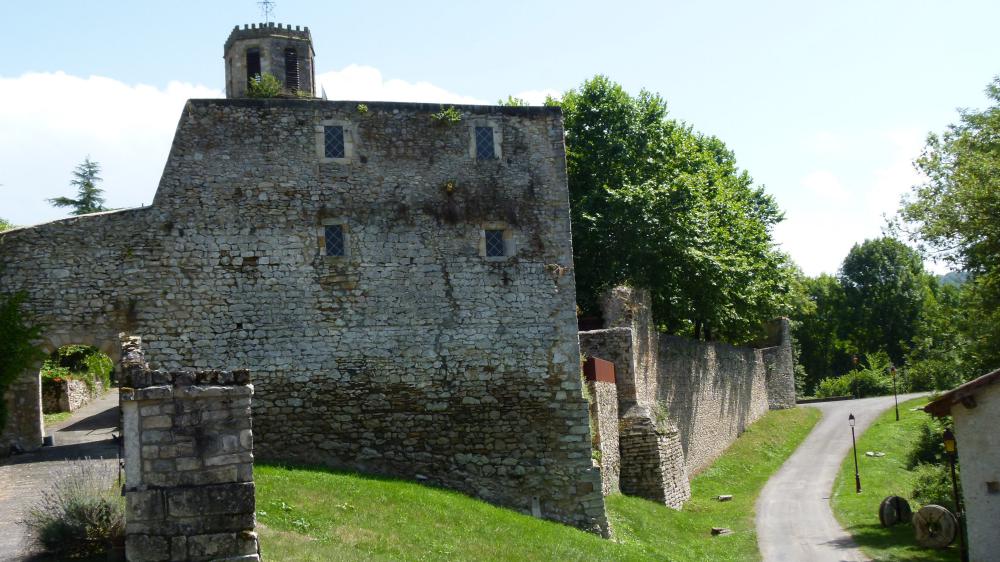


A small village in the Volvestre region, Tourtouse is a medieval village with fortified ramparts, a feudal mound, and a keep, where you can learn about its history along an interpretive trail.
It boasts beautiful ruins that suggest Tourtouse had its moments of glory despite a somewhat tumultuous history.
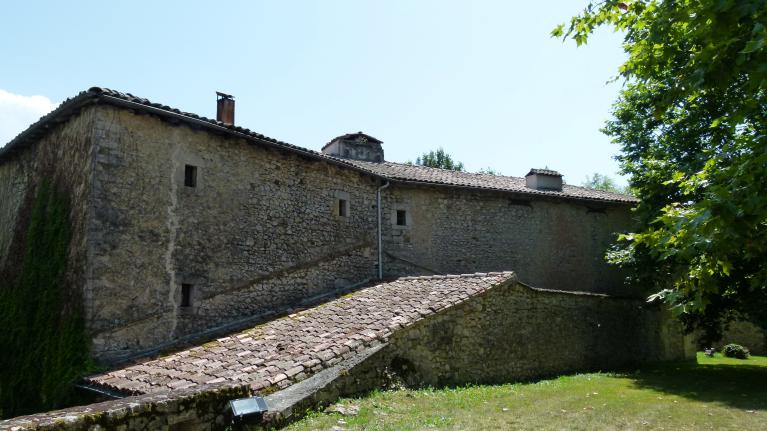
Under the Ancien Régime, Tourtouse was the “seigniorial land of the bishops of Couserans,” and Prince Bishop Bruno de Ruade had a wing of the old fortified castle and the church rebuilt on the site of the old castle chapel.
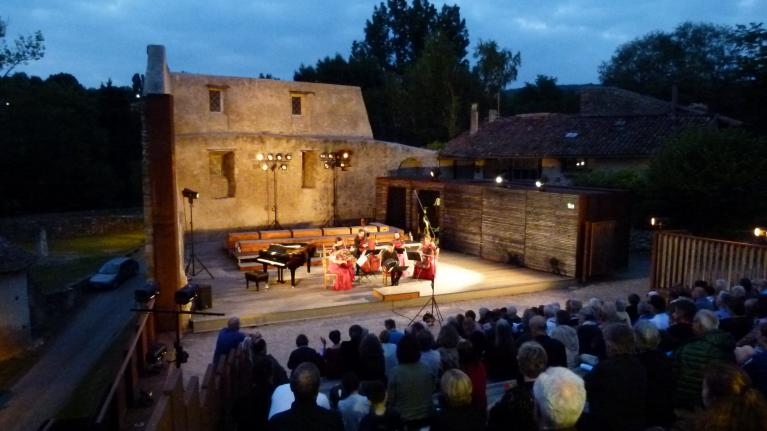
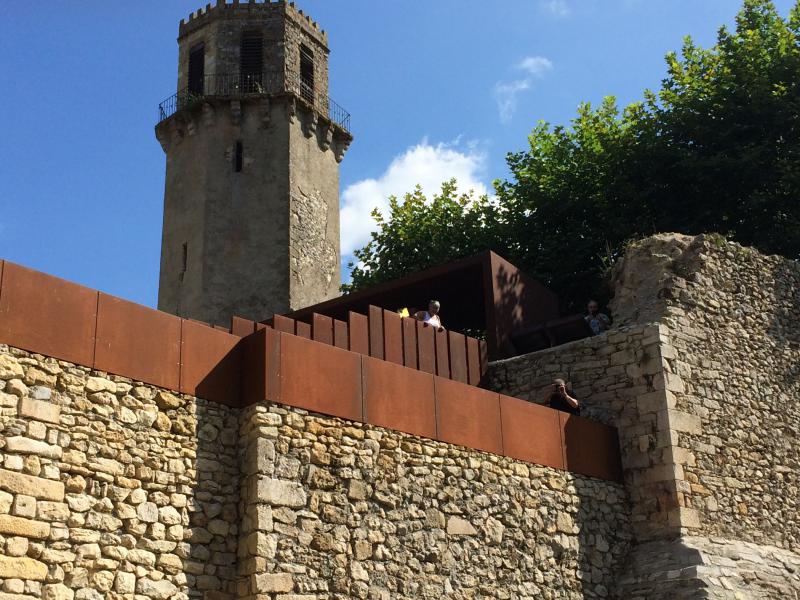
Within the village walls, part of the ramparts has been restored as an open-air theater, providing a superb venue for performances, notably for the Remp'arts association with its eclectic program.
A beautiful heritage...
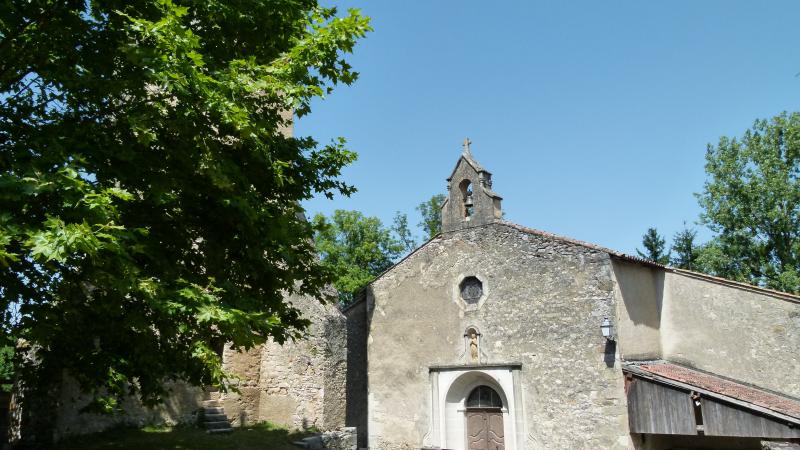
Tourtouse boasts a beautiful heritage. Starting with the Church of Notre Dame de l'Assomption, built on the site of the former 12th-century church, which was burned down by Protestant troops in the summer of 1569. Rebuilt by Bishop Bruno de Ruade, it is dedicated to Our Lady of the Assumption. It had the classic shape of a cross before the two western chapels were added in 1866. In the niche above the door, there is a 17th-century statue of the Virgin Mary.
The medieval episcopal castle stood on a rocky outcrop, a “roque,” inside a bend in the river.
The interior, which is not currently visible, retains some interesting features, including the bishop's living room with its fireplace and French ceiling, and its very large chapel paved with white and green glazed tiles.
The open-air theater, certified as a “rural center of excellence” (the second in Ariège), has breathed new life into the site of the “feudal motte.” It has a capacity of 250 seats.
The keep is a 23-meter-high heptagonal tower (crowned with machicolations, of which the corbels remain), built on the square base of the 12th-century tower. This tower has served as a bell tower since an unknown date. The oldest bell dates from 1830, the other two from 1863.
The Sainte Barbe Chapel was built in the early 17th century in memory of the fire of 1569, which was started by Protestants.
Tourouse is also home to two caves, including the Papy Cave, discovered on March 25, 1956, by Elie Papy. It contains magnificent concretions.
Cave bear bones have been discovered there, as well as cave bear “nests” in the clay soil and scratch marks on the walls. It has proved to be rich in cave-dwelling animals, and samples taken from it have been studied in depth at the biospeleological laboratory in Moulis.
The cave known as Tourouse served for a long time as a “cave school” for many caving clubs before being protected by its classification as a European Heritage Site, as it is home to miniopteres, represented in France and therefore in the Pyrenees by a single species characterized by a head similar to that of a mouse and an attraction to the underground world.
Finally, no visit to Tourtouse would be complete without taking the Promenade des Évêques, a path approximately 200 meters long that runs alongside the former garden of Bishop Bruno de Ruade and leads to the oratory. It is listed as a historic monument.
In the 17th century, the garden was planted with vines, and the flowerbeds contained tulip bulbs, which were very rare at the time.
Town hall
127, route de Lasserre,
09230 Tourtouse
Tel.: +33 (0)5 61 96 42 03