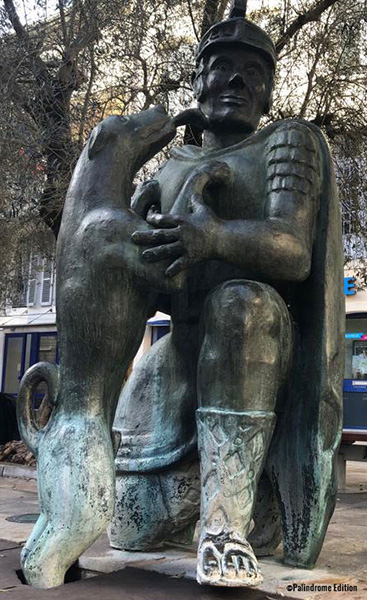

According to a legend from Dax, a Roman legionnaire stationed in Dax was called on a mission with his dog, who was sick and crippled by rheumatism.
Heartbroken, the legionnaire, passing by the Adour River, threw the dog into the water to put an end to its suffering.
Three years later, upon returning from the campaign, he could not believe his eyes: his dog had drifted along the river to pockets of mud that allowed him to regain his youth.
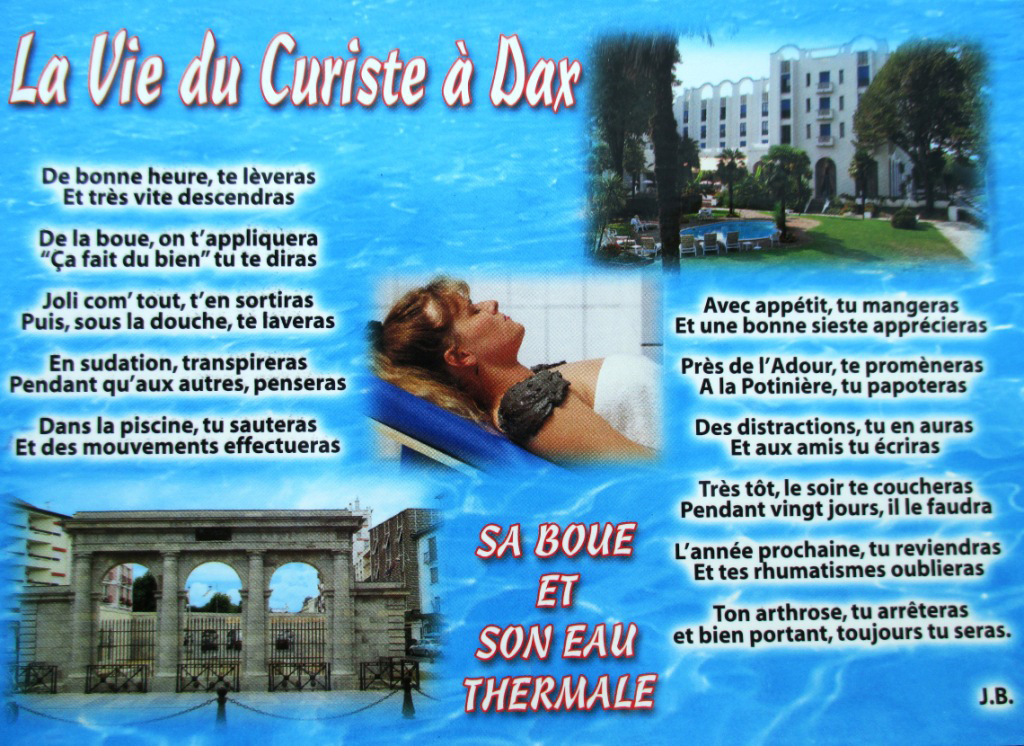
Left for dead in the Adour, the dog had washed up on the riverbank and was wading in the mud. The benefits of the peloid—this naturally occurring thermal mud—and the warmth of the waters gave him a new lease on life.
As he entered the city, he saw his dog running toward him from a distance and greeting him enthusiastically.
Thermalism was born in Dax.
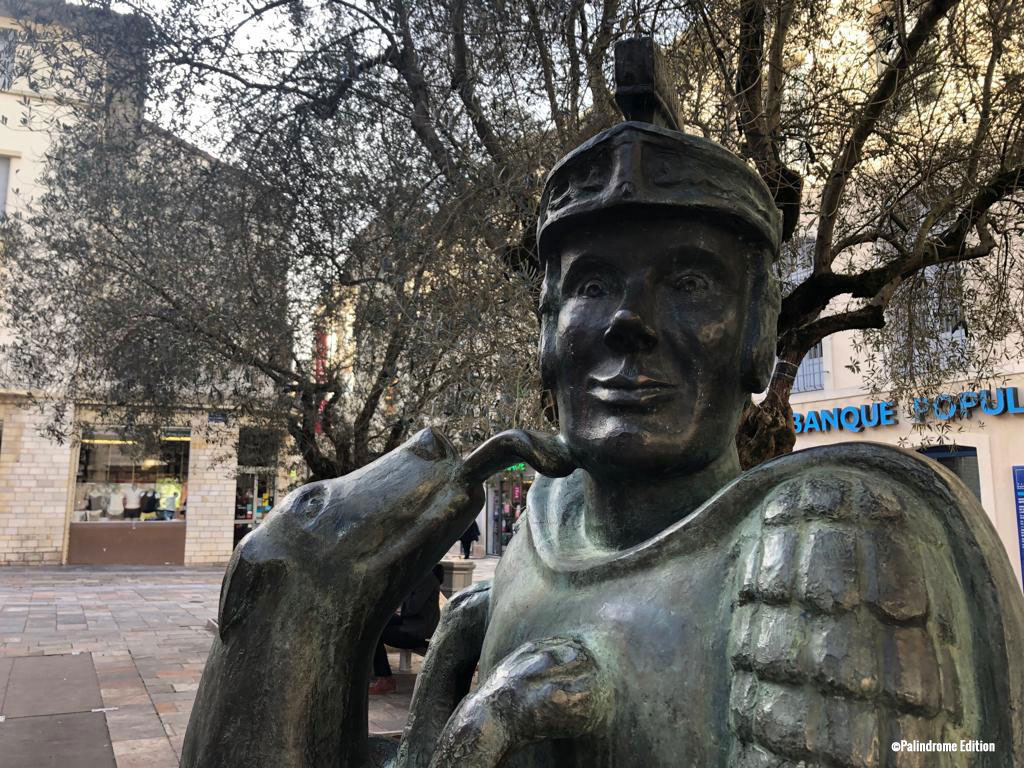
This story still bears witness today to the medicinal qualities of the thermal mud. On Place de la Cathédrale in Dax, surrounded by three century-old olive trees, stands a statue of a legionnaire and his dog.
Translated with DeepL.com
(free version)