

Located on the banks of the Ouvèze River, Vaison officially became known as La Romaine in 1924 following excavations undertaken by Abbé Sautel in the early 20th century, which revealed numerous ancient treasures.
Visit...
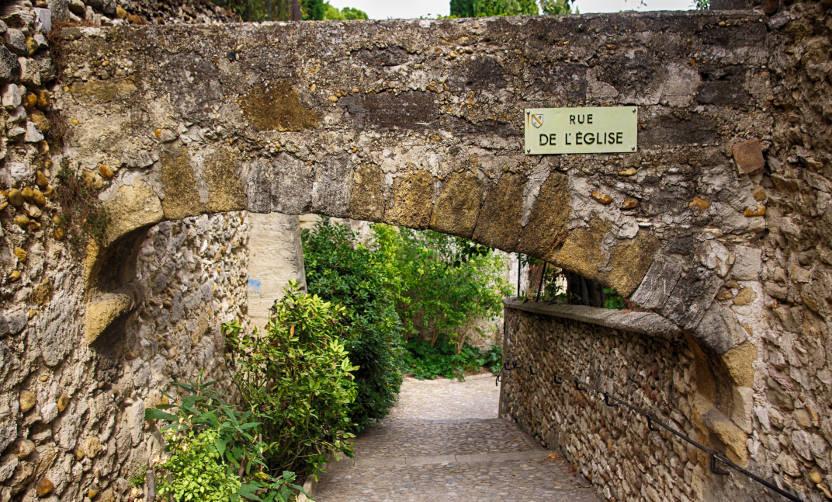
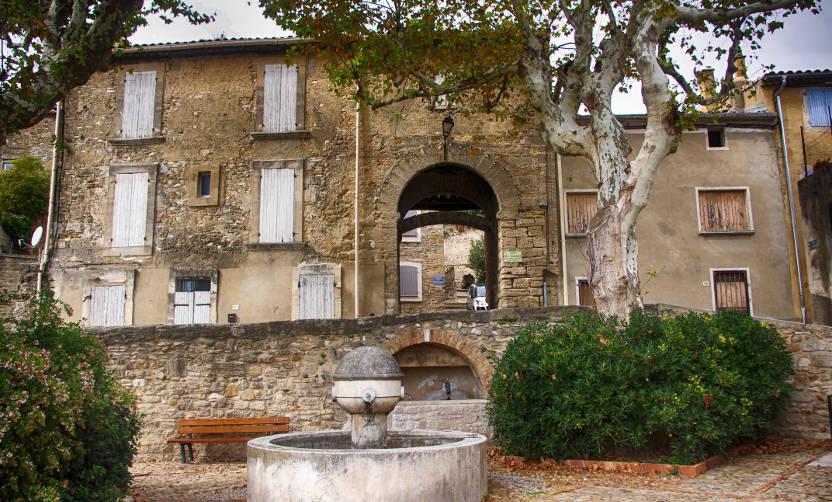
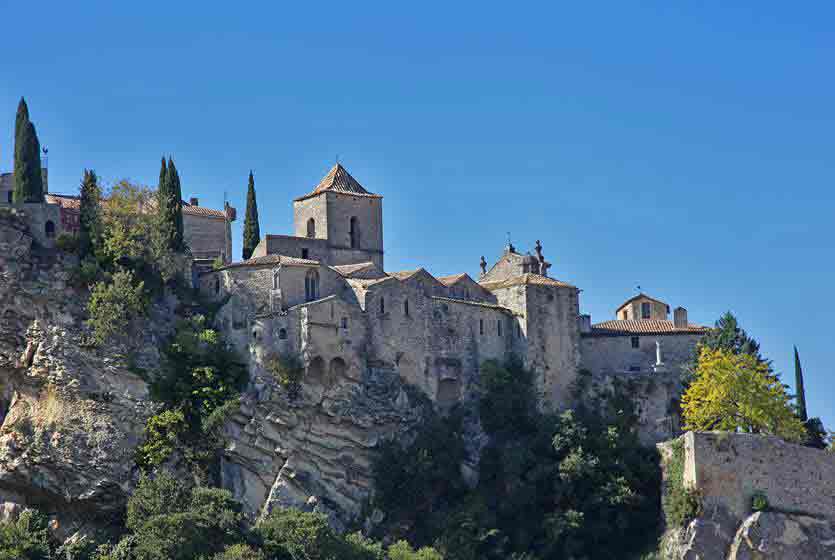
Vaison-la-Romaine is renowned for its rich heritage, its acres of Gallo-Roman excavations, and its medieval town, known as the “upper town,” topped by the ruins of a 12th-century feudal castle, the Château des Comtes de Toulouse. A stroll through its narrow, winding cobbled streets allows you to admire the double fortifications, the belfry, the cathedral, the richly decorated ancient gates, the small squares adorned with fresh fountains, and the houses built on the cliffside.
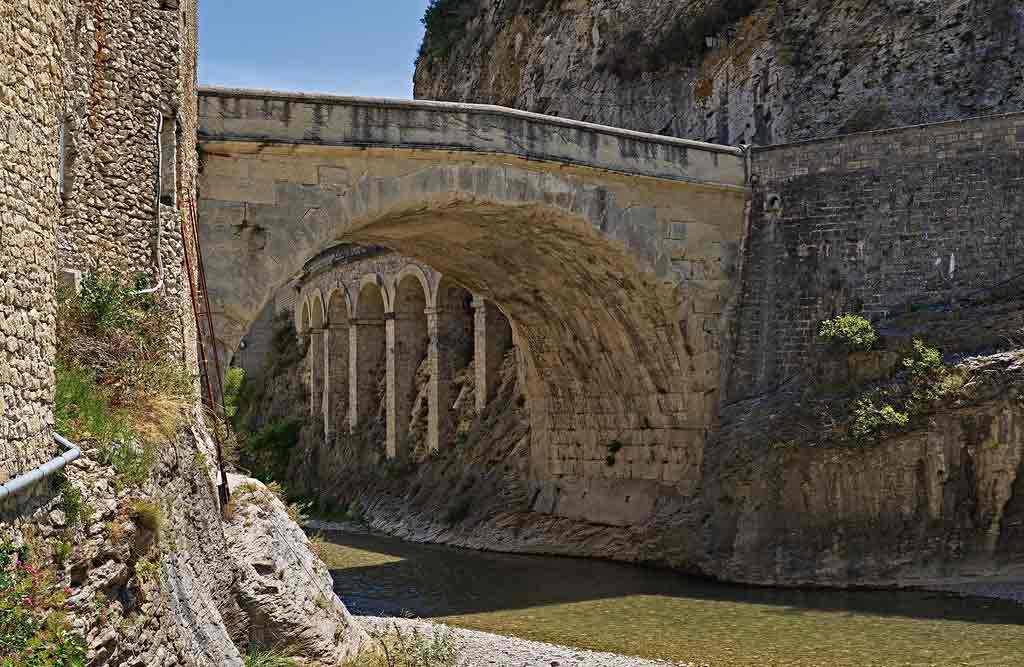
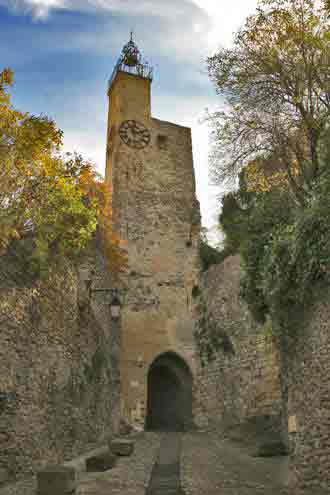
The Roman bridge over the Ouvèze, the gates of the upper town, and the clock tower are just some of the other sites to visit.
Roman city
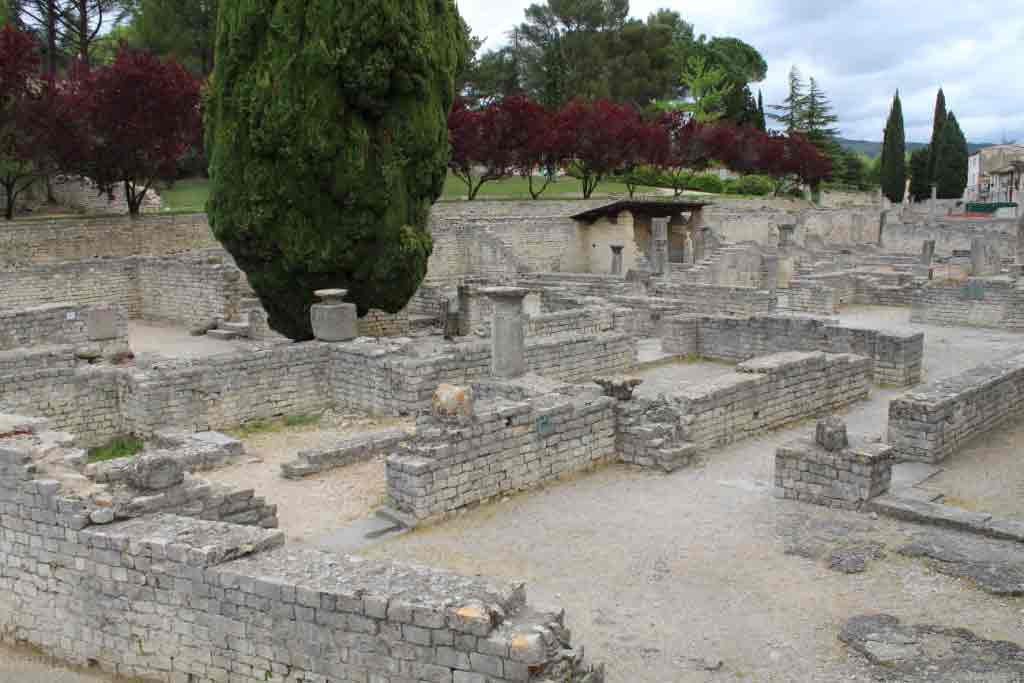
The lower town lies on the right bank of the Ouvèze. Discovered in the early 20th century, the Roman city was excavated over an area of 15 hectares, revealing one of the most prosperous cities in the Narbonnaise region, capital of the Voconces.
In the city center, on either side of the Tourist Office, the ancient sites of Puymin and La Villasse rub shoulders with squares, cafés, restaurants, and homes, and still form the largest archaeological site in France today.
The Roman city that has been discovered is very rich and includes the House of Apollo Lauré, Pompey's Portico, the House of the Dolphin, the House of the Silver Bust, the shopping street, the forum, apartment buildings (insula), the Roman theater, and thermal baths: (La Villasse site), the 2nd-century southern baths on the right bank of the Ouvèze, and the better-known northern baths, built in the middle of the 1st century on 2,000 m².
The Theo-Desplans Archaeological Museum, a site museum, displays a multitude of everyday objects, imperial statues, frescoes and mosaics.
Religious heritage
The Cathedral of Notre-Dame-de-Nazareth in Vaison-la-Romaine and its cloister are very famous. The cloister has retained three of its original galleries, dating from the 12th and 13th centuries, with the south-east gallery having been rebuilt in the 19th century. It is one of the finest examples of Romanesque art. Its twin arches and small columns are of consummate artistic quality. Built in the 10th century by the canons of the chapter, it was repaired by Bishop Joseph Marie de Suarès in the 17th century and completely restored in the 19th century by M. Revoil, the departmental architect. Square in shape, it contains four vaulted galleries decorated with cornices, onto which doors once opened, connecting to the adjoining cells of the canons.
The Cathedral of Sainte-Marie-de-l'Assomption, also known as the Cathedral of the Upper Town, is a former Catholic cathedral and has been listed as a historic monument since 1994.
Closed for twenty-five years, it was restored in 2015 and reopened to the public for cultural and religious events. Its furnishings and liturgical objects, including a remarkable 17th-century gilded wooden statue of Saint Joseph with the Child Jesus, have recently been returned to it.
The Saint-Quenin Chapel is a 12th-century Romanesque chapel named after Saint Quenin, bishop of Vaison, who was born in the 6th century.
It is one of the finest examples of Provençal Romanesque art inspired by antiquity.
Not to mention the Chapel of the White Penitents and the Statue of the Black Virgin.
Vaison la Romaine Tourist Office
Place du Chanoine Sautel –
84110 Vaison-la-Romaine
Tel.: +33 (0)4 90 36 02 11
http://www.vaison-ventoux-tourisme.com