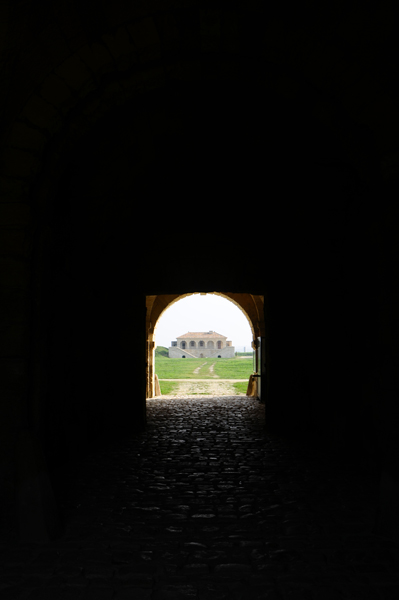

In May 1689, Louis XIV decided to build Fort de Cussac to protect Bordeaux from possible enemy sea attacks.
The building was to form part of the fortified system designed by Vauban in the Gironde estuary, complementing the citadelle de Blaye and Fort Paté.
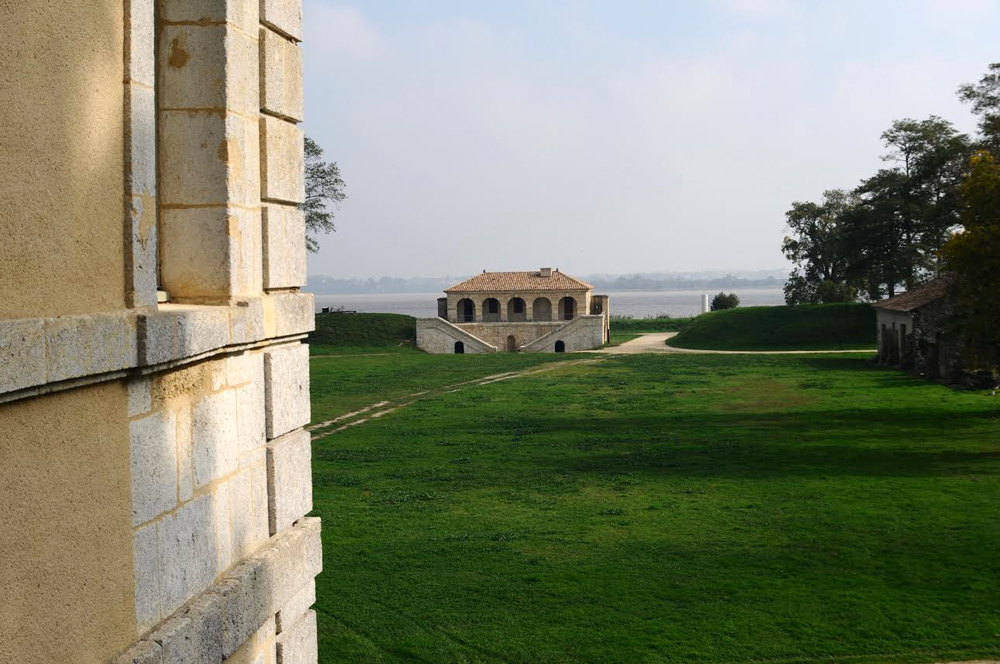
Work on Fort Médoc began in 1690, and the 347-meter-long, 327-meter-wide fort is surrounded by meadows, trees and former marshland.
Fort de Cussac
“The whole complex represents a total surface area of around 24 hectares (including the glacis).
A simple, enlarged square plan was drawn up, with four bastions - Bastions de la Mer, du Dauphin, de France and du Roi - linked by curtain walls, the whole flanked by a covered path and a grassy glacis.
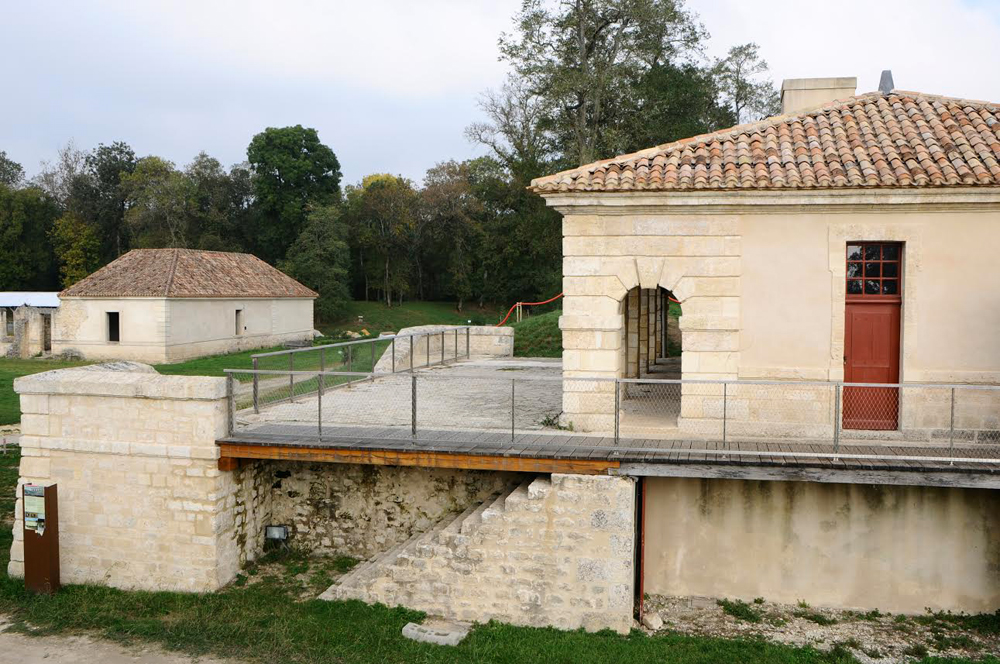
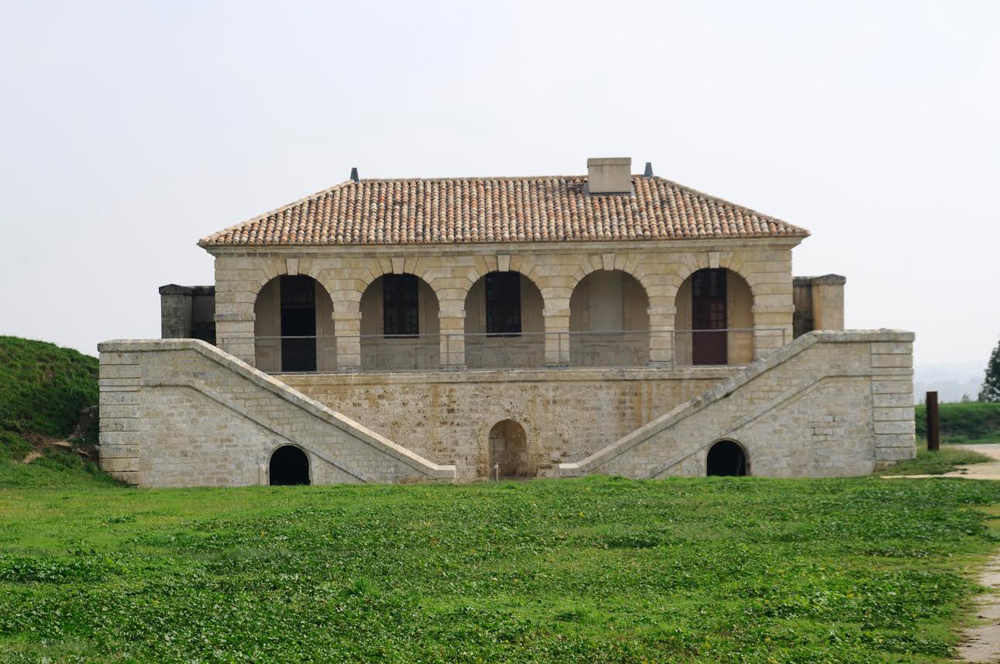
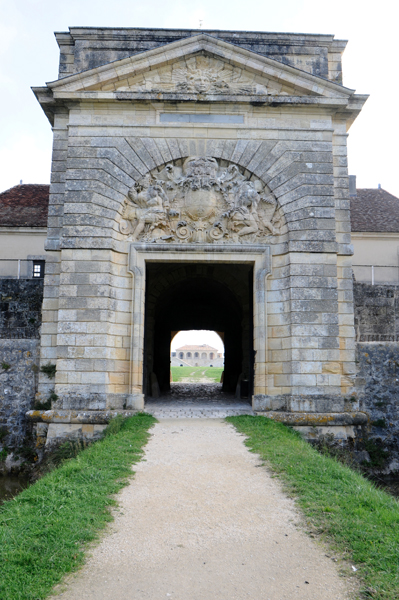
In just a few months, the moat, bastions, curtain walls, batteries, half-moon and royal gateway were built. Utility dwellings such as barracks, chapel and bakery were built from 1691 onwards. The corps de garde de la Mer, now known as the corps de garde de la Rivière, was completed in 1694. The building overlooks the bastions. It is covered with hollow tiles and has lattice windows. With its corridor of loopholes, it has a large central room, where the anchors of a large wooden bas-flanc in the walls are still visible. A cistern was built in the early 19th century.
Very soon after its construction, Fort Médoc appeared useless to the local military administration. As a result, it saw little use and was remodeled several times. Its role during the First World War was limited to housing resting soldiers. In 1916, the six-man garrison was sent to the front, and it was definitively abandoned. The law of August 1, 1929 allowed for the decommissioning of the fort, which had become useless.
It was bought by the commune of Cussac-Fort-Médoc in 1930.
A major restoration campaign
On January 31, 1956, the fort's powder magazine, the remains of the buildings to the east, facing the Gironde, and the cadastral land were listed as Historic Monuments.
In 2008, the site was listed as a UNESCO World Heritage Site (Vauban network).
Launched in 2011, restoration work on the Cussac-Fort-Médoc fort's guardhouse is now complete, allowing visitors to discover the site from a whole new angle. Thanks to the sponsorship of the Total Foundation, the Fondation du Patrimoine has joined forces with the commune of Cussac-Fort-Médoc to restore the guardhouse. The Foundation has provided financial support of €130,000 for the restoration of this part of the famous “lock” on the Gironde estuary, designed by Vauban.
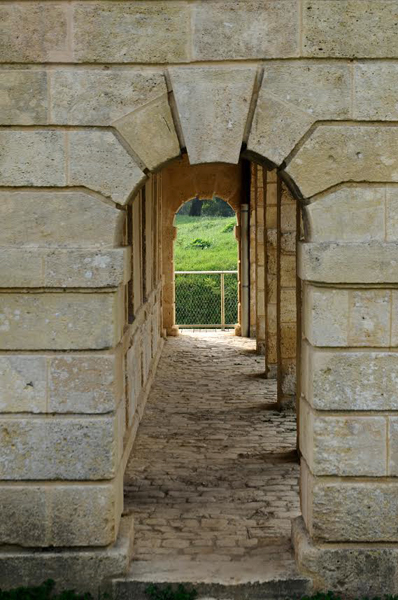
The major restoration campaign has involved waterproofing and renovating the facades, terraces and interiors, repairing the parapets and gun battlements, reprofiling the front guardhouse, clearing and cleaning the front staircases, waterproofing and restoring the old paving on the terrace, and replacing the stones on the Porte Royale. The three rooms in the guardhouse will be used for temporary exhibitions or special events (rooms for artists, associations or companies).
Fort Médoc Welcome Point
Cussac-Fort-Médoc
Tel.: 05 56 58 98 40
Translated with DeepL.com
(free version)