
Saint-Léon-sur-Vézère, an iconic village in the Vézère Valley located about ten kilometers from Montignac-Lascaux, is listed among the “Most Beautiful Villages of France.”
A typical and authentic village of the Périgord Noir
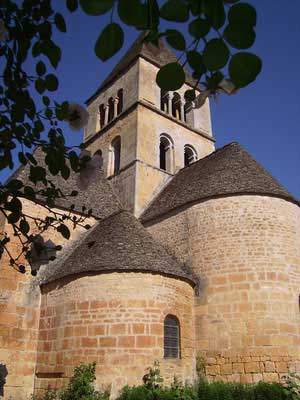
In addition to its typical Périgord houses built of blond stone, Saint-Léon-sur-Vézère boasts a rich historical heritage, notably its 12th-century Romanesque church. Listed as a Historic Monument, it is built in a very simple architectural style and consists of a single nave extended by a transept and an apse housing the altar, flanked by two apsidioles.
The walls of the apse are adorned with five arches resting on columns with capitals carved with interlacing patterns.
The vaults of the apse and the south apsidiole feature superimposed frescoes from different periods.
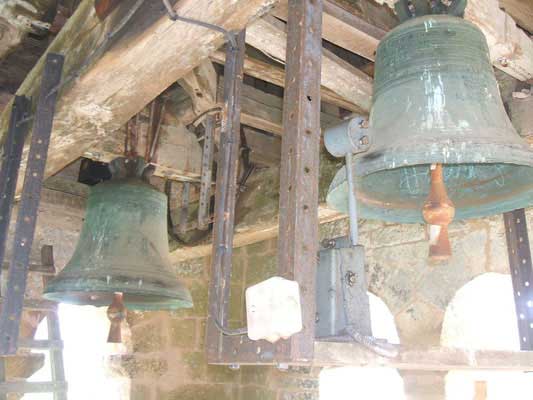
In the summer, the church serves as the venue for concerts during the Périgord Noir Music Festival.
Saint-Léon-sur-Vézère is also home to the Manoir de la Salle, a private residence.
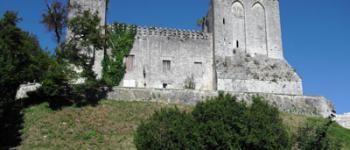
Built in the 14th century, the complex comprises the manor house and a square keep flanked by a corner tower; both the keep and the tower are crowned with machicolations.
After the Revolution, it was purchased by the owners of the Château de Clérans.
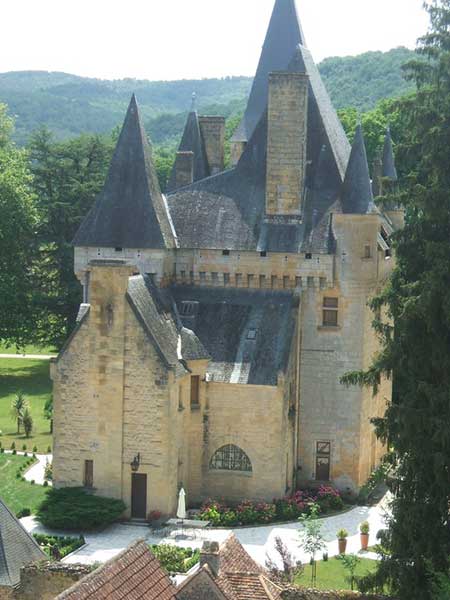
The Château de Clérans, also privately owned, belonged to Monsieur Cambronne in the early 20th century—the great-nephew of the famous General Cambronne!
Dating from the 16th century, it features a park with century-old trees overlooking the Vézère River and boasts a beautiful polygonal stair tower, corner turrets, and the pediments of several dormer windows.
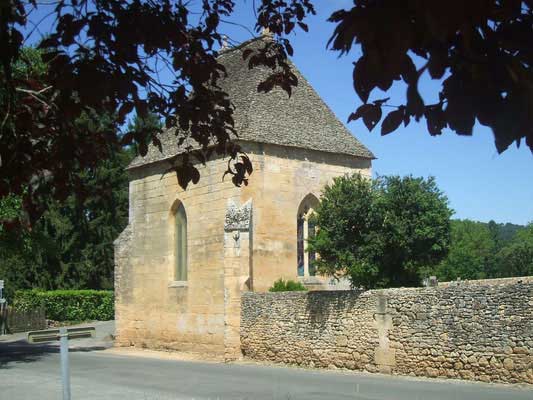
During this visit, one must not overlook the Expiatory Chapel.
Cubic in shape, with four buttresses at the corners bearing the coats of arms of the lords who had it built in the 16th century, it is covered with slate tiles.
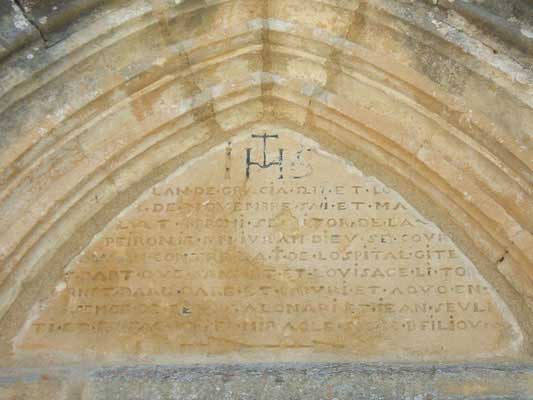
Above the door, an inscription in the Romance language recounts the miracle that led to the chapel’s construction.
In 1283, a man named Bromi blasphemed against the Cross that stood at this spot and fell dead.
In 1890, the skeleton of an adult—believed to be that of the heretic—was discovered beneath one of the two 12th-century tombstones placed in front of the entrance.
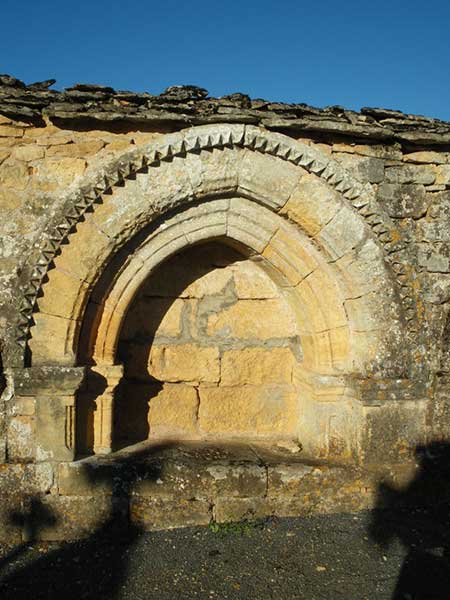
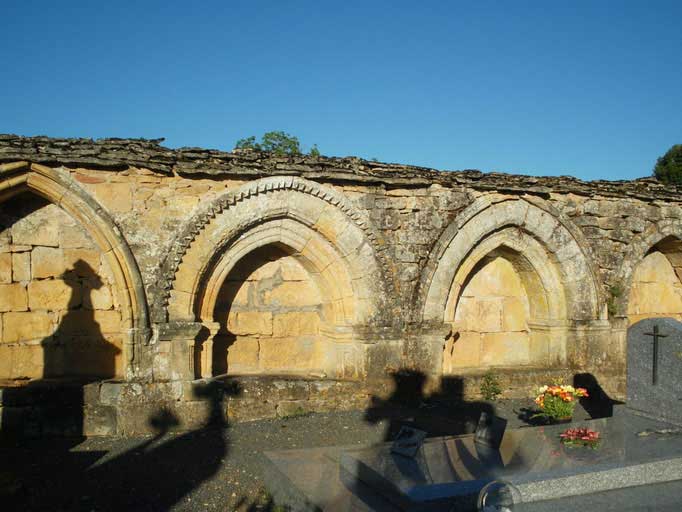
Also not to be missed are the “enfeus” in the cemetery, which, due to flooding of the Vézère River, were moved from the church to the expiatory chapel at the village’s edge.
A “niche” is a tomb built into the wall of a religious building, generally reserved for nobles.
Finally, from the Côte de Jor, a path leads to the Château de Chaban, a private site built in the 16th century on the site of another castle destroyed in the 14th century.
It bears the name of an illustrious family descended from the Counts of Poitiers, Princes of Chabans.
Saint-Léon-sur-Vézère, a village of artists, artisans, and natural beauty
Many artists and artisans have chosen to settle in this village, working primarily with wood, felt, and mammoth ivory
Set in a rural setting, Saint-Léon-sur-Vézère offers a variety of outdoor activities and invites visitors to explore the Conquil Park, home to 25 species of dinosaurs as well as a troglodytic site. In addition to numerous activities, a tree-top adventure course is available! In addition to numerous activities, a tree-top adventure course is available.
The village is also home to “Dhagpo Kagyu Ling,” the main European center for the preservation and dissemination of the “Kagyu” Buddhist tradition.
Saint-Léon-sur-Vézère Town Hall
24290 Saint-Léon-sur-Vézère
Tel.: 05 53 51 08 42 (during the season) 05 53 50 73 16
contact@saint-leon-sur-vezere.fr