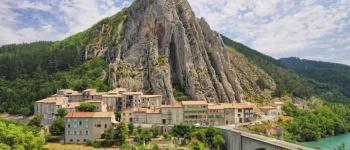



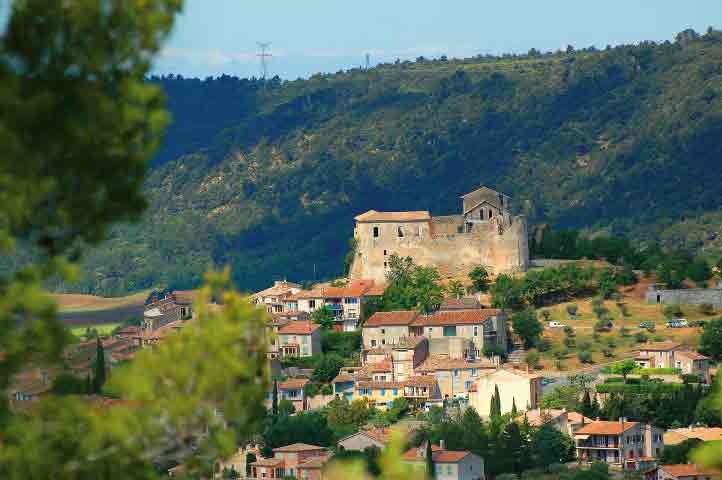
A typical Provençal village, crowned by a 12th-century castle and bordered by the clear waters of the Verdon River, Gréoux-les-Bains is situated at the junction of the Verdon and Luberon Regional Nature Parks, as well as at the crossroads of four departments: Var, Vaucluse, Bouches-du-Rhône, and Alpes-de-Haute-Provence.
A Name and Its History
The history of Gréoux-les-Bains dates back to Celtic times. During antiquity, the village gained a fine reputation thanks to its hot springs gushing from deep within the earth. The Romans then built thermal baths there and named the town “Nymphis Grisélius.”
The name underwent several changes: Gréoulx, or Gréoux (pronounced with an “x”), derived from the Celtic name as early as 1923, thus highlighting its long history as a spa town dating back to the 1st century B.C.
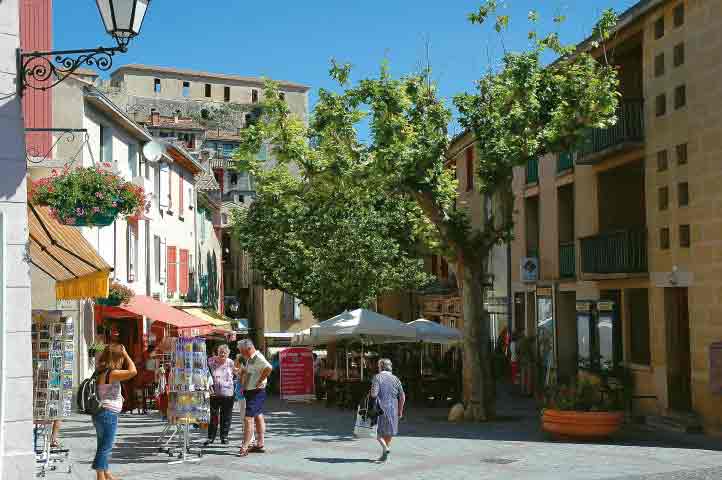
Gréoux-les-Bains invites visitors, as they wander its cobblestone streets, to discover its history and traditions, its old ramparts, and its historic buildings that bear witness to its authenticity.
The Castle
Over the years, the village has grown up around its castle, at the foot of its castle hill, and surrounded by three sets of walls that were successively built and then destroyed. A few remnants of these walls remain today. Long ago, the defensive towers were converted into homes. The calades—paved areas, as they’re called in Occitan—are no longer reserved for carriages and horses. And the village gates remain open and welcoming. Yet these vestiges of times past tell the Provençal story of this village with its authentic charm.
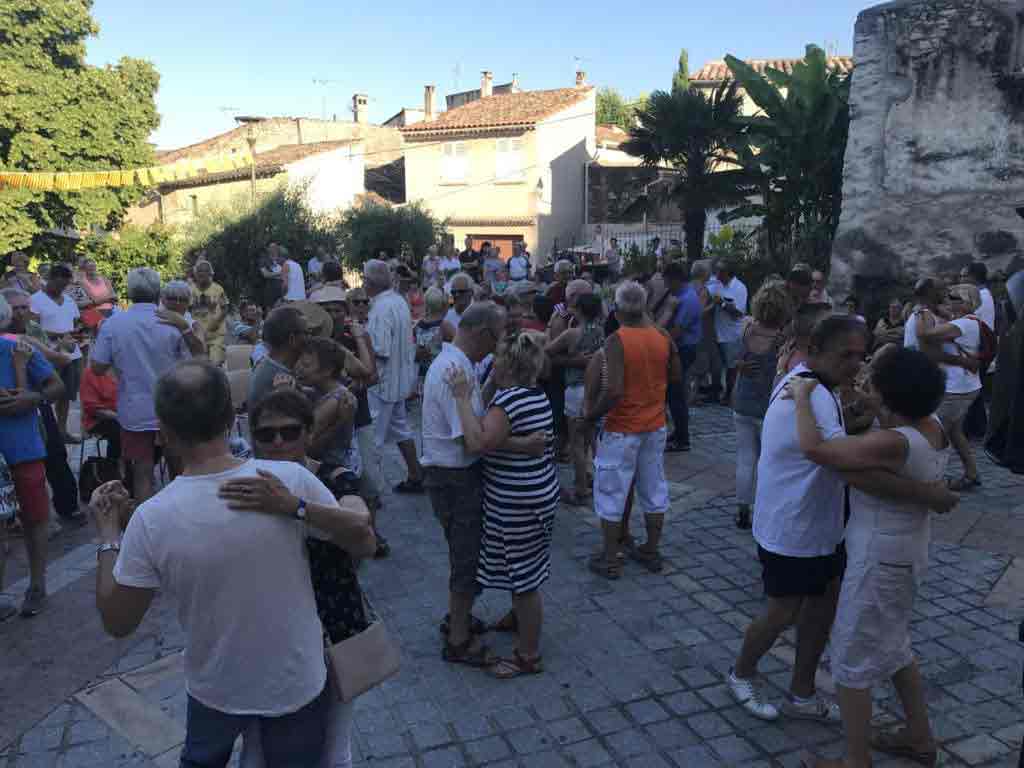
This castle is the third largest in the Provence-Alpes-Côte d’Azur region, just behind the Palace of the Popes in Avignon and the Episcopal Palace of Salon-de-Provence. Thanks to numerous restorations, the ruined fortress now welcomes the public for outdoor evening events in its courtyard.
Everything suggests that the first stones intended for the construction of the castle known as the “Templars’ Castle” were laid in the 12th century. This medieval fortress, which became a stately home, has seen many owners pass through its halls over the years. In the 14th century, it belonged to Charles II, Count of Provence; it was ceded to the Knights Hospitaller of Saint John of Jerusalem and then to Arnaud de Trian. From the late 14th century until the Revolution, several secular lords succeeded one another at the castle. Abandoned, it was acquired as National Property by Arnoux Guibert and then designated a Historic Monument in 1840.
The Legend of the Templars
The name “Templar Castle” is likely not based on a legend! While the archives of Provence allow neither to refute nor confirm this theory, other clues nevertheless cast doubt on it. Indeed, history reveals that in 1307, Charles II, Count of Provence, transferred to the Hospitallers of Saint John a large number of lands formerly owned by the Templars, including the village of Gréoux-les-Bains. The mystery remains…
Fountains and Washhouses
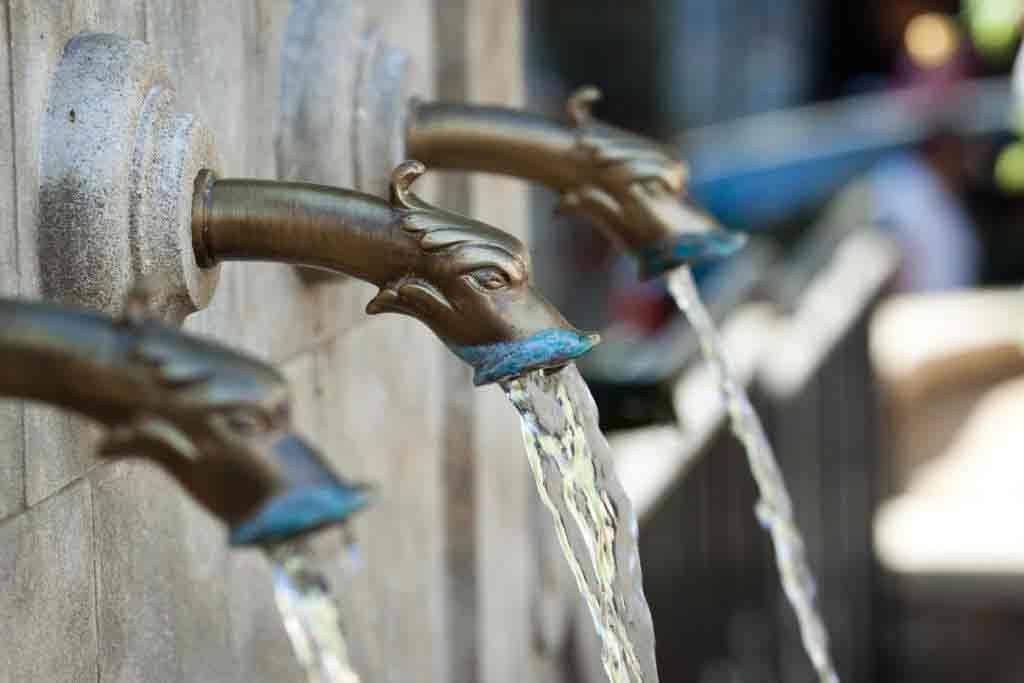
The village of Gréoux-les-Bains echoes with the lapping of water from fountains and washhouses
Since its installation, the Fontaine du Grysélis has stood at the village’s main crossroads. Renovated in 2009, it is built of Gordes stone. Since June 2016, a new fountain has appeared in Gréoux-les-Bains, celebrating thirty years of twinning with the German town of Bad Krozingen. Its changing colors illuminate the starry nights of the Provençal sky.
The wash houses continue the stroll along the water. One is located in the center of the village, near the boules court. It bears witness to times gone by, when women would come here to wash their laundry together. A second wash house is located on Rue Fontaine Vieille. Less visible, it is nonetheless just as charming, carved directly from the stone. The refreshing experience continues with a leisurely stroll through the three shaded parks: Oliva, Thermal, and Morelon.
Gréoux-les-Bains is also a lush green setting, with greenery covering 75% of its area. The 150 hectares of landscaped green spaces, home to some thirty remarkable, identified trees and the many flowers that add color to the village, earned it a third flower in the 2013 National Competition for Flowered Towns and Villages.
The Thermal Baths
“I know of no place more healing for boredom than Gréoux… just as this blessed place cures rheumatism with ancient remedies from waters older than the world…,” Jean Giono, 1950.
Dating back to antiquity, the thermal baths of Gréoux-les-Bains have attracted spa guests since Roman times. Part of the Chaîne Thermale du Soleil, they primarily treat respiratory conditions and rheumatism. The hot waters, drawn from deep underground and emerging at over 40°C, are renowned and highly valued by spa guests for their many beneficial properties.
Gréoux-les-Bains Tourist Office
7 Place de l’Hôtel de ville
04800 Gréoux-les-Bains
Tel.: 04 92 78 01 08
greouxlesbains@tourisme-dlva.fr
https://www.greoux-les-bains.com/
Translated with DeepL.com
(free version)


Vous souhaitez acheter Sur les traces des templiers ?


Vous souhaitez acheter Gréoux-les-bains : à la découverte d'une ville et son histoire ?